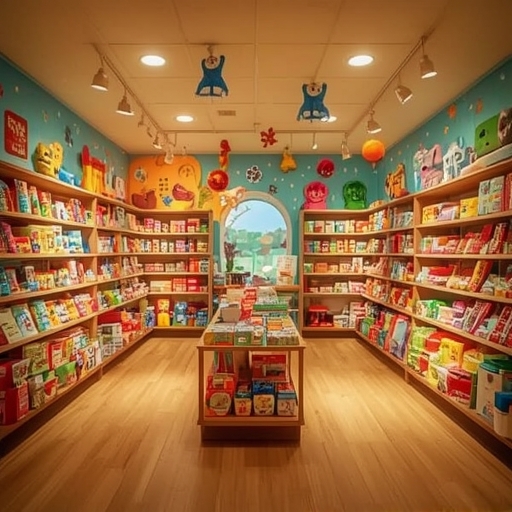
Once upon a time, Toys R Us stood not merely as a retailer but as a cultural institution that shaped the imaginations of generations. For decades, its sprawling stores were more than commercial spaces—they were wonderlands where children dashed between aisles glowing with color, where parents rediscovered their own youthful joy, and where the concept of the modern toy store was elevated into an experience. At its height, the brand represented innovation and dominance, at one point claiming roughly a quarter of the entire toy market. It was both a playground and an empire, a place where whimsy met business brilliance.
Yet, like many giants of its era, Toys R Us faced the turbulent winds of change. Digital transformation and e-commerce growth began to shift consumer habits, while debt and management missteps hollowed out its once unshakable foundation. By 2018, the unthinkable happened: the beloved toy titan shuttered all of its U.S. stores, leaving behind empty shelves and countless memories frozen in time. For many, its closure felt less like a corporate failure and more like the loss of a childhood friend—a symbol of innocence and joy succumbed to the realities of a rapidly evolving retail world.
But legends rarely fade quietly. In the years since, profound efforts have emerged to resurrect Toys R Us, not as a mere echo of its former self, but as a revitalized brand with fresh energy and modern ingenuity. Through partnerships with major retailers, the opening of concept spaces, and strategic rebranding initiatives, the name has quietly regained its footing. This revival demonstrates an essential truth of business resilience: a brand that resonates deeply with emotion can outlive even its darkest days.
The trajectory of Toys R Us offers invaluable lessons to entrepreneurs and corporate leaders alike. It reminds us that nostalgia, when paired strategically with innovation, holds extraordinary power. The company’s rebirth hinges not on replicating the past, but on reimagining it—blending digital experiences with tactile memories, rebuilding trust with families, and proving that emotional connection remains a crucial driver of customer loyalty in an age dominated by convenience.
Ultimately, the Toys R Us story transcends the toy industry. It is a case study in the interplay between change and continuity, showing that even when dreams dim, they can be rekindled through creativity, courage, and commitment to reinvention. Its journey—from childlike wonder to commercial rebirth—stands as a testament that true icons never quite disappear; they evolve until the magic feels new again.
Sourse: https://www.businessinsider.com/toys-r-us-history-rise-fall-resurrection-2025-12


