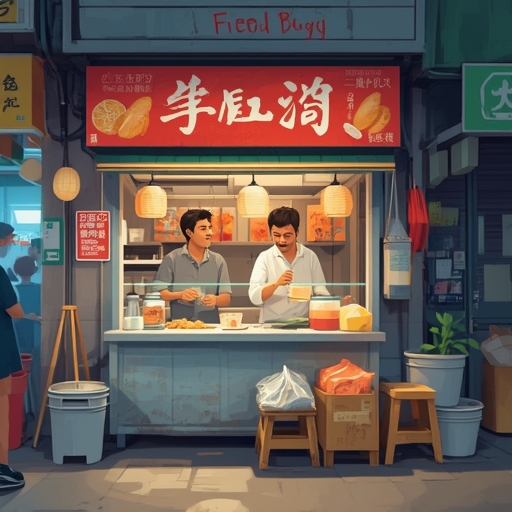
Transitioning from the structured, meticulously logical world of computer engineering to the bustling, sensory-rich environment of a hawker stall was not merely a change in career path — it was a profound redefinition of purpose, identity, and family connection. At first glance, such a shift might appear irrational: trading algorithms for aprons, or lines of code for lines of hungry customers. Yet, beneath this dramatic change lay an unspoken yearning — a desire to work alongside my father, to understand the roots of his labor, and to rediscover the value of human connection over digital precision.
When I first joined my father in the food trade, the adjustment was swift, brutal, and enlightening. I swapped my ergonomic chair for plastic stools, fluorescent office lighting for the glow of a wok flame, and quiet keystrokes for the clamor of sizzling oil and impatient orders. Each day brought with it challenges that tested far more than technical knowledge — they required emotional patience, humility, and resilience. I discovered that in this environment, success was not quantifiable through lines of code or efficiency metrics, but through satisfied smiles, returning customers, and the silent rhythm of teamwork forged through years of shared effort.
Working with family, however, was a double-edged sword. The intimacy of our bond made every disagreement sharper, every miscommunication heavier. We quarreled over recipes, routine, and responsibility — small sparks that, over time, revealed deep-seated differences in temperament and vision. Yet, those same conflicts became lessons in empathy and endurance. Gradually, I learned that my father’s brusque criticism was not rejection, but an expression of care shaped by decades of toil. Likewise, he came to appreciate the perspective I brought from my digital background — ideas of organization, customer engagement, and modern efficiency that began to complement his traditional wisdom.
Through this shared labor, I discovered that food and technology, though appearing worlds apart, share a surprising kinship. Both demand precision, creativity, and perseverance. The logic of engineering helped me refine our processes, while the warmth of human connection in the stall enriched my understanding of purpose beyond productivity. Each bowl we served became a symbol of more than sustenance — it embodied collaboration, heritage, and love expressed through action.
Today, when I look back at this transformation, I no longer see it as a departure from engineering, but an expansion of it. I am still solving problems — only now, they are human and emotional rather than purely computational. The hawker trade, with all its heat, noise, and chaos, has taught me more about patience, communication, and resilience than any classroom or corporate project could. Above all, it has deepened my relationship with my father, reminding me daily that success is not measured in data or design, but in the strength of the bonds we build, the people we serve, and the meaning we find in our shared work.
Sourse: https://www.businessinsider.com/gen-z-ditched-computer-engineering-joined-hawker-business-2026-1


