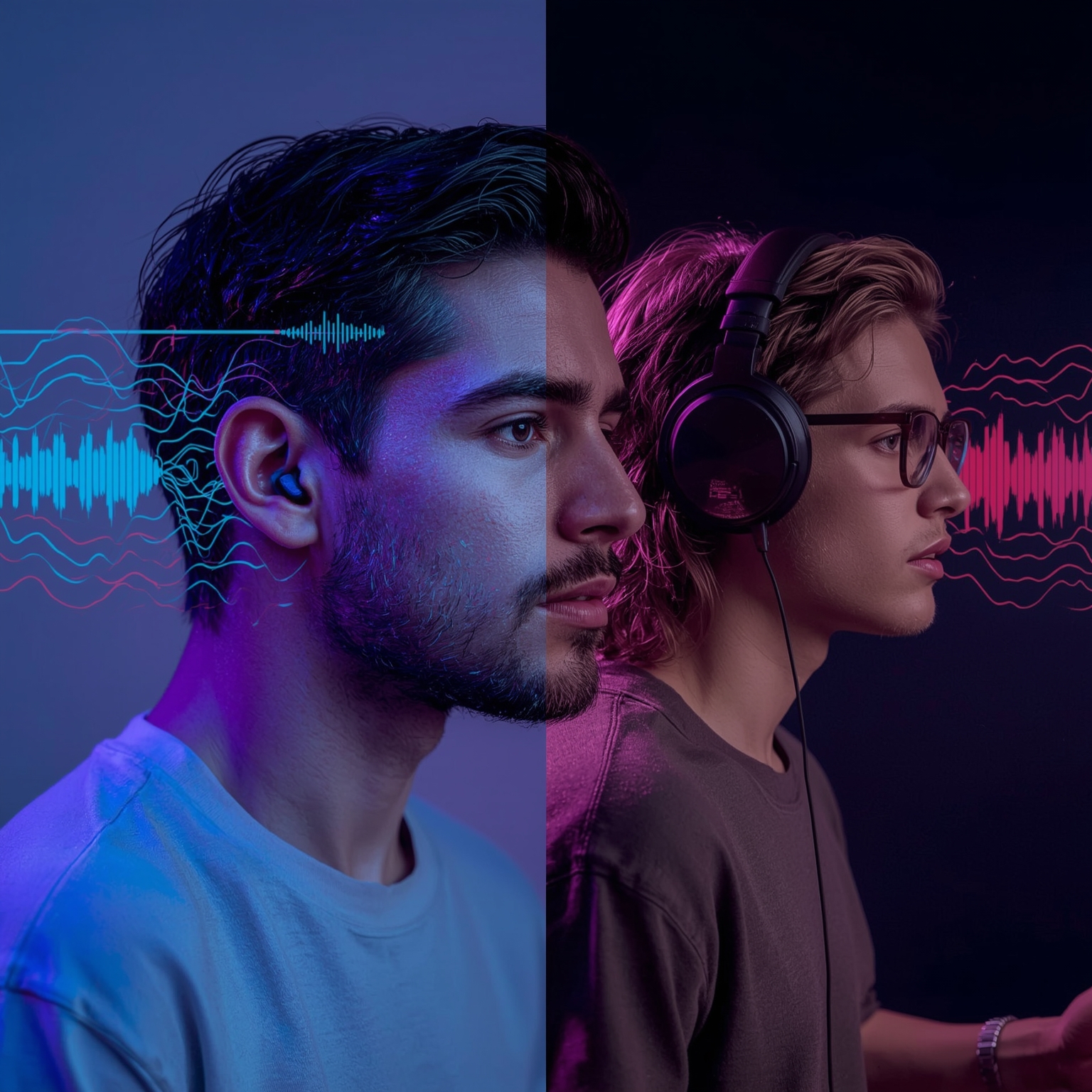
In today’s world of casual streaming, the majority of people consume music through convenient and portable devices such as wireless earbuds, compact Bluetooth speakers, or even directly from the speakers integrated into their smartphones. When music is enjoyed in these ways, subtle nuances in sound quality are inherently masked, which means that listeners almost certainly will not perceive an audible distinction between Spotify’s standard high-quality streams at 320Kbps and the platform’s newer offering of lossless audio. However, in a setting where one listens with wired headphones, ideally while working or relaxing without significant background noise, or when music is played through a higher-end speaker system from a manufacturer like Bose that supports Spotify Connect, the story changes. In those scenarios, lossless audio can, in fact, reveal details that are otherwise flattened or obscured by compression.
When comparing Spotify’s baseline “normal” quality at 96Kbps to the lossless 24-bit / 44.1kHz FLAC files now being introduced, the disparity is glaring. The contrast feels almost unfair, as even listeners without refined or trained ears can easily notice the degradation introduced by such low-bitrate compression. Although compression technology has improved dramatically since the early 2000s—when file sharing through platforms like Napster provided poorly rendered MP3s that often belonged more to nostalgia than fidelity—96Kbps streams still suffer audible shortcomings. High-frequency content, in particular, tends to sound smeared or muddy, with cymbals, strings, and layered effects often distorting or losing clarity.
The progression from normal quality to Spotify’s high-quality 320Kbps tier is therefore striking and immediately rewarding. Moving beyond that—into the domain of lossless or even so-called “hi-res lossless” from competitors like Tidal—offers subtler gains. At this stage, diminishing returns come into play: most listeners, even those who care deeply about music, may struggle to identify consistent differences between 320Kbps streams and true lossless audio. To complicate matters, a variety of music genres introduce textures that naturally conceal audio fidelity distinctions. For instance, a hip-hop track incorporating the crackle of old vinyl, a heavy metal record laden with distorted guitar chords, or an electronic dance single dominated by aggressively compressed beats will each obscure the delicate differences that a lossless version would provide. This is not to suggest that the differences are nonexistent—it is possible, for example, to notice that Kendrick Lamar’s vocals feel sharper and more cutting through a lossless stream, or that Sudan Archives’ digitally treated violin carries greater liveliness. Yet, these refinements are often buried under the energy and intensity of the overall mix.
Where lossless becomes more unambiguously beneficial is in music that relies on nuance, space, and acoustic integrity. Gentle genres, particularly those foregrounding vocals or acoustic instruments, most effectively exploit the higher fidelity. During testing, one of the most telling examples came from Nina Simone’s *Pastel Blues*, an album available in both lossless on Spotify and in hi-res lossless formats on Apple and Tidal. The difference between Spotify’s lossless and standard high-quality streams was subtle but meaningful when listening intently: the ambient texture underpinning “Strange Fruit” revealed a slightly different tonal shading, and on “Sinnerman,” the high-hats acquired a crispness that better conveyed the dynamics of the performance. Additionally, older analog recordings prone to clipping tend to sound less abrasive when heard in lossless form, as the distortion softens into something closer to a natural imperfection rather than a digital artifact.
Accessing these subtle improvements, however, is not entirely straightforward. Spotify Lossless is not available via the browser-based web player and instead requires installation of either the desktop or mobile application. More importantly, many typical playback methods negate its benefits. Bluetooth connections cannot support uncompressed lossless audio, as their bandwidth limitations demand that even high-resolution files undergo compression before transmission. Spotify itself makes this reality explicit in its announcements, noting the unavoidable compromise. While advanced codecs such as LDAC and aptX HD claim higher efficiency, their limited adoption means they cannot be regarded as a universal solution. In short, if your listening is tethered to Bluetooth devices, you will not hear the differences promised by lossless streaming.
Consequently, anyone seeking to evaluate or appreciate Spotify’s lossless audio must turn to wired equipment. A reliable pair of over-ear wired headphones is strongly recommended, since they isolate external noise and emphasize subtle textures that can be harder to detect on speakers without dedicated acoustic treatment. For speaker-based listening, high-quality monitors can suffice, yet discerning distinctions requires a quiet environment. Another logistical consideration is that Spotify requires enabling the lossless function on each individual device, and this preference does not automatically carry across them.
Some criticism has arisen over Spotify’s decision to limit its lossless quality to 24-bit / 44.1kHz, especially since competing platforms like Tidal, Apple Music, and Qobuz promote support for vastly higher specifications—up to 24-bit / 192kHz hi-res FLAC. While audiophiles often demand uncompromising specifications, in practice these ultra-high-resolution files do not provide correspondingly dramatic improvements. The enhancements from standard lossless to hi-res lossless are extremely minute, verging on imperceptible for nearly all listeners. Playing 192kHz tracks requires ancillary hardware such as an external digital-to-analog converter (DAC), or in rare cases, speakers equipped with Tidal Connect. DAC prices vary wildly, from affordable dongles costing around $50 to extravagant audiophile units upwards of $15,000, clearly illustrating that pursuing extreme fidelity quickly leaves the realm of practicality.
In testing scenarios utilizing equipment ranging from a MacBook Air linked to a Focusrite Scarlett 18i20 interface, PreSonus studio monitors, and professional headphones from Sony and AIAIAI, even repeated careful comparisons among Spotify, Apple, and Tidal yielded only elusive differences. At times Apple Music’s hi-res lossless version of “Strange Fruit” carried marginally more clarity than Spotify’s lossless playback, while in other instances, Apple’s standard lossless encodings seemed less noisy. Yet, even when carefully switching between Apple’s standard and hi-res lossless streams, the distinctions essentially disappeared, suggesting that encoding quality matters more than sheer resolution figures. Moreover, attempting to stream hi-res lossless consistently strained bandwidth. Playback interruptions, buffering, and track-skipping delays were common annoyances, particularly on Apple Music.
Ultimately, the practical consideration is that most contemporary listeners default to Bluetooth headphones. Since these cannot deliver lossless signals, the existence of higher-resolution audio tiers has little daily relevance. For users equipped with robust wired headphones or high-caliber speakers, Spotify’s lossless tier can add authenticity and refinement to the listening experience. Yet for the majority, who prefer convenience and portability, the supposed superiority of hi-res formats remains a marginal, if not wholly irrelevant, luxury rather than a transformational breakthrough.
Sourse: https://www.theverge.com/hands-on/777691/spotify-lossless-flac-audio-inconvenient-improvement