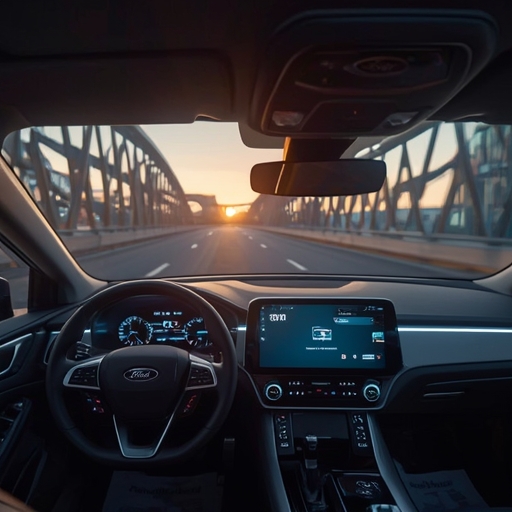
Ford is not merely participating in the global pursuit of autonomous mobility — it is asserting a leadership position by developing its self-driving technologies entirely in-house. This strategic decision signifies more than a technical initiative; it reflects a long-term commitment to innovation, safety, and independence in the evolving automotive landscape. By internalizing research and development, Ford gains greater control over crucial algorithms, hardware integration, and the seamless coordination between vehicle sensors and artificial intelligence systems, all of which form the foundation of a truly autonomous experience.
Looking ahead, Ford has set its sights on a transformative milestone: by 2028, the company plans to debut advanced eyes-off driving capabilities on public roads. This term, “eyes-off,” denotes a level of automation in which drivers can confidently relinquish active supervision of the vehicle under specific conditions, relying instead on the car’s sophisticated navigation and situational awareness technologies. Such an achievement would place Ford among a select group of industry pioneers redefining what mobility means for the modern world.
Developing this technology internally ensures that Ford can align its innovation roadmap directly with its design philosophy, focusing on user comfort, reliability, and the intuitive fusion of digital interfaces with mechanical precision. The manufacturer’s approach is not limited to incremental progress—it aims to create a holistic ecosystem of smart vehicles capable of learning, communicating, and improving over time. Engineers are refining sensor arrays, machine-learning algorithms, and drive-by-wire systems that collectively interpret dynamic road conditions faster and more accurately than human reflexes could ever allow.
When Ford ultimately introduces its in-house self-driving platform, it will symbolize far more than the automation of steering and acceleration; it will represent a rethinking of mobility itself. Commuters could soon experience travel as productive or restful time, freeing them from the constraints of manual control. Moreover, Ford’s advancements have the potential to influence urban design, traffic flow optimization, and energy efficiency. In essence, the company’s 2028 goal encapsulates a vision of transportation that is not only safer and more efficient but also profoundly human-centric — a fusion of engineering precision, technological foresight, and the enduring spirit of innovation that has defined the Ford legacy for more than a century.
Sourse: https://www.businessinsider.com/ford-autonomy-self-driving-cheaper-than-licensing-2026-1


