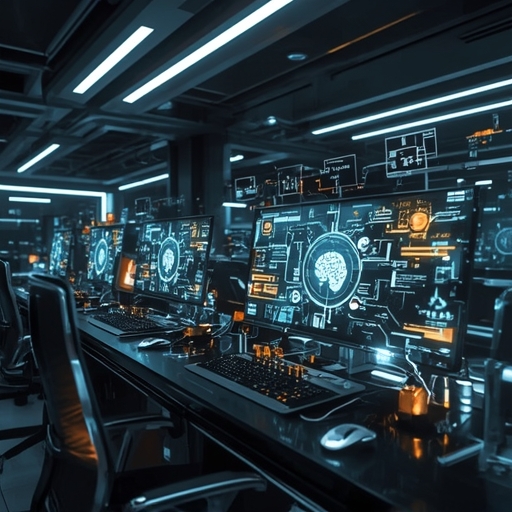
The global personal computer market is entering a defining new phase — one driven not by incremental innovation but by a seismic shift in intelligence itself. For many years, the PC has remained a familiar companion at work, a reliable engine for creativity, and a platform that seemed immune to radical change. Yet, as artificial intelligence rapidly embeds itself into every aspect of technology, the humble computer is transforming into something altogether different: a responsive, adaptive and almost sentient partner in our digital lives.
Over the past decade, traditional PCs have faced challenges from tablets, smartphones, and the rise of cloud computing. Each wave promised to diminish the PC’s relevance, and yet, somehow, the desktop and laptop persevered. But this time the disruption is of another magnitude. The integration of AI — from neural processing units built directly into processors to advanced learning algorithms that predict user behavior — marks an inflection point similar to the leap from analog to digital or from offline to connected computing. No longer is the computer a static tool awaiting commands; it is evolving into a dynamic system that learns, assists, and anticipates.
Imagine a future in which your PC intuitively understands your workflow. Creative software that adapts instantly to your artistic preferences, spreadsheets that automate complex projections, and virtual assistants that comprehend your tone and intent rather than simply your typed requests — all of these are rapidly moving from concept to reality. The transformation extends beyond software into the very hardware itself: AI-optimized chips, memory architectures tuned for data inference, and cooling systems designed for machine learning workloads signal that the personal computer’s DNA is being rewritten.
Yet this revolution raises broader questions. How will workplaces transform when everyday computing tasks are enhanced or replaced by AI? What does productivity mean in an environment where the computer thinks alongside you, not merely for you? And perhaps most importantly, how do we ensure that intelligence augmentation does not come at the cost of human creativity and control? Just as personal computing once democratized access to information and innovation, the coming AI surge will democratize intelligence — but with it comes the responsibility to guide and govern this new power.
Major industry players have already begun their race to define this next era. Chip manufacturers are embedding neural cores within CPUs; software giants are infusing applications with AI that learns from millions of user interactions; and hardware designers are reimagining ergonomics and interfaces to harmonize with predictive assistance. The sum of these developments is not merely a faster or more efficient computer, but a fundamentally different relationship between humans and machines.
We stand, therefore, at the dawn of the AI-driven PC era — one in which computing evolves from passive execution to proactive collaboration. The implications reach far beyond improved performance metrics or sleeker designs. They redefine what a computer is and, by extension, what it means to compute. As we prepare for this technological surge, one truth becomes increasingly clear: the storm of artificial intelligence is not a distant forecast; it has already begun to reshape the skyline of the PC world, and it promises to transform how we think, work, and create for decades to come.
Sourse: https://www.theverge.com/tech/858505/pc-market-ram-nand-ssd-gpu-pricing-notepad


