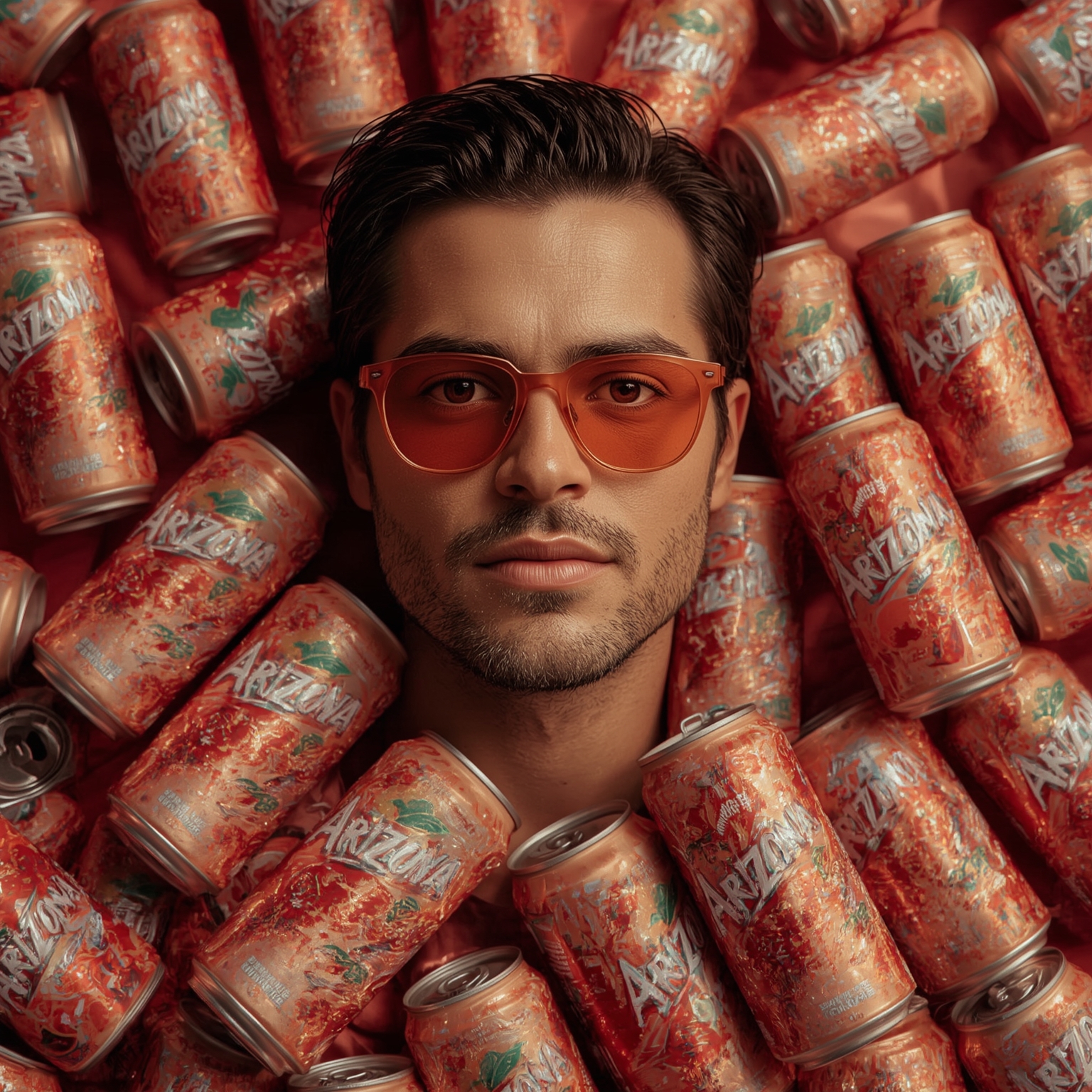
In today’s age, when colossal fortunes are often amassed within Silicon Valley through the mastery of algorithms, artificial intelligence, and disruptive technologies, Don Vultaggio’s story provides a remarkable counterpoint. While many of America’s most celebrated billionaires hail from backgrounds steeped in formal education and elite networks, the 73-year-old cofounder of AriZona Beverage USA accumulated his fortune in a strikingly different way—by selling vibrantly decorated, 99-cent cans of iced tea that have become both a cultural staple and a symbol of affordability across the United States. With a net worth approaching $6 billion, Vultaggio has demonstrated that entrepreneurial insight and unwavering instincts can rival, and even surpass, the advantages traditionally offered by prestigious degrees and Silicon Valley connections.
Unlike figures such as Elon Musk, Jeff Bezos, or Warren Buffett, who are often associated with academic pedigree and institutional affiliations, Vultaggio never attended college. In fact, he candidly admits that completing high school itself might have been out of reach without the persistent encouragement and intervention of his mother. Reflecting on his lack of scholastic motivation, he has plainly acknowledged: “I wasn’t a good student, but that wasn’t because of the school—it was my own responsibility. For me, things eventually worked out, but I know that for many others, it doesn’t.” These reflections underscore his belief that education, while valuable, was not the bedrock of his success; instead, guidance and mentorship played a far more decisive role in shaping his trajectory.
From an early age, Vultaggio benefitted from two critical mentors—his first employer and his father. As a teenager still enrolled in school, he secured one of his earliest jobs working at a Brooklyn grocery store, earning the modest wage of a single dollar per hour. Though humble, this experience left a profound mark. It was there, under the guidance of a supportive boss, that he first absorbed the essence of being a businessperson, learning the value of money not as an abstract figure but as the direct compensation for an hour’s labor. The impact of this mentorship was so strong that after his employer’s passing years later, the family entrusted Vultaggio with his ashes. Today, that symbolic gesture is honored with a plaque in Vultaggio’s backyard that reads: “World’s greatest boss.”
Following high school, Vultaggio continued working in the grocery trade, much like his father, who had spent his entire career in that field. Yet, his father, determined to see his son avoid the same long grind of supermarket life, arranged employment for him at a local brewery. That chapter did not last long; within just a few years the brewery shuttered, an outcome that imparted another indelible business lesson. Reflecting on the closure, Vultaggio drew a clear conclusion: businesses often wither not because of poor execution but because they drift away from the desires and expectations of the consumer. In this case, the brewery’s beer, once fashionable, had simply lost its relevance among drinkers. This realization laid the intellectual foundation for his enduring focus on meeting customer needs.
For roughly two decades after the brewery closure, Vultaggio poured his energy into operating a beer distribution business of his own creation. Building it from the ground up, he established routes throughout New York, supplying bodegas in even the toughest neighborhoods. Although his products did not always boast the lowest price tags, his dedication to delivering exceptional value and service distinguished him from competitors. This emphasis on reliability, attentiveness, and customer trust became a defining trait—a quality that would later underpin the meteoric rise of AriZona Iced Tea. In 1992, drawing upon years of frontline experience in beverage distribution, Vultaggio partnered with John Ferolito to officially launch AriZona Beverage USA.
In truth, when Vultaggio first turned to iced tea, his expertise in the category was minimal. He openly concedes that beyond childhood memories of drinking it, he knew almost nothing about sourcing, formulation, or large-scale production. Nevertheless, what he lacked in technical knowledge, he compensated for with deep, practical insight into consumer decision-making. Having observed countless purchasing choices inside convenience stores and corner shops over the years, he understood one key principle: customers often made their choices impulsively, directly in front of the refrigerated cooler, uninfluenced by the expensive advertising campaigns of major brands. More often than not, it was the clarity of pricing and the immediate visibility of a product that tipped the scales.
Following this instinct, he made what many around him believed to be a reckless gamble: boldly printing “99¢” directly on AriZona’s oversized cans. Despite one salesman labeling it “the dumbest idea” he had ever encountered, the decision soon proved revolutionary. By 2000, sales had leapt by 30 percent, and in the decades since, AriZona has grown into one of the foremost ready-to-drink tea brands in the United States. According to Forbes, the company now sells approximately 2 billion cans each year, generating revenues of around $4 billion. While the iconic 24-ounce (now slightly adjusted to 22-ounce) tallboy remains its signature product, the brand has expanded into gallon jugs, smaller bottles, juice blends, and energy drinks.
When asked about the roots of his enduring success, Vultaggio often reiterates a simple but powerful principle: true value is forged when a consumer, in exchange for one hard-earned dollar, feels they have received a deal worth far more. That sense of fairness and reward, he argues, secures loyalty and ensures repeat business. This has been reinforced not only by consistent pricing—famously refusing to raise the 99-cent tag over 33 years despite inflation and industry-wide price hikes—but also by creative product packaging. The original can designs, many of which were created by his wife, stood out for their bright colors and innovative patterns, differentiating AriZona in crowded coolers long before digital marketing became ubiquitous.
Of course, Vultaggio’s path was not without turbulence. A prolonged and bitter legal battle with cofounder John Ferolito dragged on for nearly a decade, ultimately ending in 2015 when Vultaggio bought out his partner’s stake for a reported $1 billion. Yet this ownership consolidation has proven to be one of his greatest strategic advantages: without outside shareholders, banks, or boards demanding returns, Vultaggio has been free to make long-term decisions, such as holding firm on prices even when transportation and supply chain costs escalated during the pandemic. This independence has not only protected the company’s customer base but also dramatically increased his own fortune, which, according to Forbes, has nearly doubled in recent years, rising from $3 billion in 2018 to nearly $6 billion in 2025.
For all his wealth and influence, however, Vultaggio maintains a deliberately modest attitude about his place in the world. He often describes himself as a “regular guy” and emphasizes that AriZona’s achievements are the collective result of thousands of dedicated employees. He insists that successful companies are not merely corporate entities but functioning communities where every member, from forklift operators to senior executives, deserves respect and recognition. In his own words: “That’s why we’re successful. It’s not just me. It’s a lot of people—all contributing, consistently, like a family.” This final sentiment captures the essence of Don Vultaggio’s legacy: a blend of instinct, resilience, humility, and above all, an unwavering commitment to giving ordinary consumers an extraordinary deal.
Sourse: https://www.businessinsider.com/don-vultaggio-never-attended-college-worth-billions-heres-how-2025-9