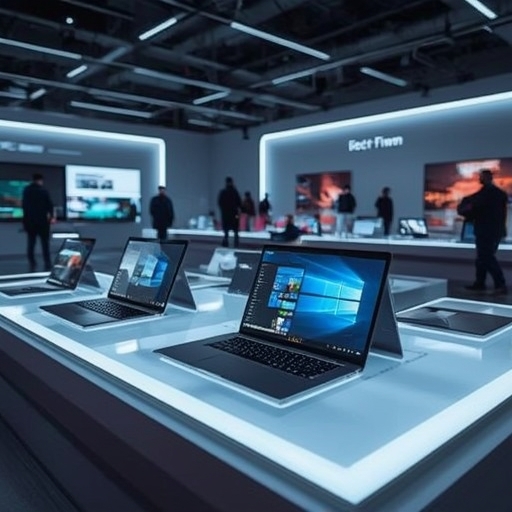
At CES 2026, the global technology stage transformed into a showcase of visionary design, engineering prowess, and ambitious innovation within the world of portable computing. Laptops — once considered the standard tools of productivity — have now evolved into breathtaking symbols of futuristic ingenuity. The event served not merely as a preview of upcoming products but as a revelation of how far we have come in blending aesthetic sophistication with advanced artificial intelligence integration.
The highlight of the exhibition was the introduction of foldable displays that defy traditional laptop silhouettes. These elegant devices, capable of transitioning from compact tablets into expansive workstations, demonstrate how flexible OLED screens and precision hinges can redefine the boundary between portability and performance. For professionals on the move, such adaptability means carrying a single dynamic platform that effortlessly shifts between creative design, video editing, and immersive entertainment setups.
Beyond physical design, the heart of innovation pulsed through the AI-driven chipsets unveiled by industry leaders such as Intel, AMD, and Qualcomm. These state-of-the-art processors promise not only raw computing power but intelligent efficiency — learning from user behavior to optimize battery consumption, predict workflow needs, and accelerate multitasking capabilities. In this way, the modern laptop no longer serves merely as a passive tool but rather as an intuitive partner that anticipates the user’s next command.
Concept models, meanwhile, blurred the lines between science fiction and tangible reality. Some prototypes featured transparent keyboards illuminated by subtle neon glows, while others integrated holographic projection systems capable of displaying 3D environments without peripheral assistance. Such creativity underscores a future in which laptops serve as collaborative portals for design, communication, and exploration, rather than limited flat screens confined by traditional interfaces.
Equally notable was the aesthetic transformation of these next-generation machines. Manufacturers embraced sleek metallic frames, ultra-light carbon composites, and sustainable innovations that minimize environmental impact without compromising durability. The results were devices that embodied both elegance and resilience — laptops meant not just to perform, but to inspire.
Ultimately, CES 2026 presented more than new gadgets; it unveiled a reimagined vision of mobile computing itself. As work, education, and entertainment merge ever more seamlessly into digital environments, these advanced devices will serve as the connective tissue uniting creativity and productivity across every discipline. Each innovation — from AI-optimized processors to transformative displays — hints at an inevitable truth: the laptop of tomorrow will be both an intelligent companion and an artistic statement of modern technology.
This evolution marks an exciting turning point. The future of computing is no longer about incremental improvements; it is about redefinition — of purpose, design, and interaction. Laptops are no longer confined to desks or laps; they unfold into infinite possibilities for a world powered by imagination and innovation.
Sourse: https://www.theverge.com/tech/858897/ces-2026-best-laptops-asus-dell-acer-msi-hp-lenovo-concepts