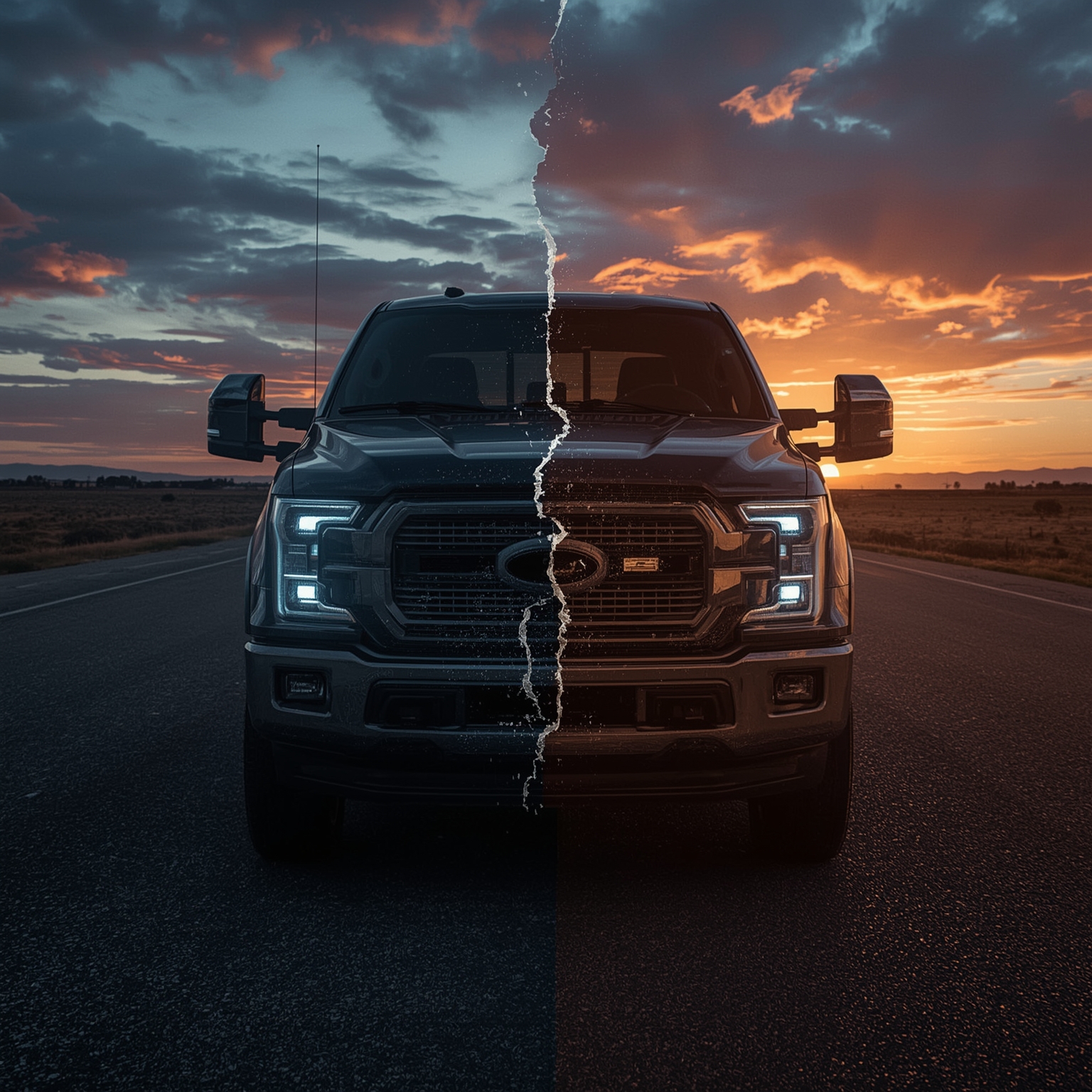
It is no secret that Americans have long nurtured a deep cultural attachment to large vehicles, particularly pickup trucks and SUVs, which symbolize both utility and rugged personal freedom. Yet, when it comes to their electric counterparts, consumer enthusiasm has not translated so smoothly. The idea of massive all-electric trucks has been far more difficult to sell to the average buyer in the United States, despite the automobile industry’s aggressive attempts to push electrification as the defining future of mobility.
This reality was underscored on Friday when Stellantis, the multinational automotive conglomerate that owns brands ranging from Jeep and Chrysler to Dodge and Ram, publicly acknowledged this market hesitation. The company revealed that it would halt production plans for the Ram 1500 REV, a highly publicized, all-electric full-size pickup truck that Stellantis had once positioned as its flagship answer to Ford’s successful F-150 Lightning. Initially marketed as a bold move into the EV truck segment, the discontinuation demonstrates how quickly strategic priorities can shift in response to consumer demand. In its formal announcement, Stellantis explained that it is now reassessing its broader product strategy in light of slowing North American interest in large electric trucks.
The decision comes at a moment of vulnerability for the automaker. Stellantis has already been contending with challenges stemming from its reliance on legacy brands such as Chrysler and Jeep, both of which have struggled to generate fresh excitement among buyers. After bringing in a new chief executive officer in May, the company has embarked on a multi-year plan aimed at restoring competitiveness and revitalizing its product portfolio. The suspension of the Ram 1500 REV project is emblematic of the difficult choices the company will need to make as it navigates this period of transition.
Yet Stellantis is hardly alone in grappling with the shrinking appetite for oversized EV trucks. Sales data indicate that even industry leaders are encountering turbulence in this space. According to estimates from Cox Automotive, stalwarts like the Ford F-150 Lightning and Tesla’s highly controversial Cybertruck each experienced year-over-year declines in sales during the most recent second quarter. Industry analysts see this as confirmation of a larger trend: enthusiasm for electric pickups has not lived up to the initial fervor and marketing optimism that accompanied their launch. Ivan Drury, director of insights at Edmunds, noted in a prior interview that the disparity between hype and reality has been glaring.
Drury explained that for years, full-size electric pickups were regarded as something of a “holy grail” for EV adoption—vehicles that could marry America’s obsession with trucks to the broader environmental and technological wave reshaping the auto industry. However, multiple interconnected factors have prevented this vision from materializing. One challenge lies in the immense brand loyalty typical of truck buyers. Truck ownership is culturally and practically significant, and consumers tend to remain fiercely committed to the brands they already trust. This cultural loyalty meant that manufacturers faced steep odds even before confronting financial considerations.
The financial equation has also proven unfavorable. Compared to traditional internal combustion engine (ICE) pickups, electric alternatives tend to carry significantly higher sticker prices. For buyers, this cost increase has often outweighed perceived benefits such as reduced running costs or lower maintenance. Drury emphasized that this inherent price disadvantage positioned automakers at a disadvantage from the very beginning.
Another complicating factor is the structure of government incentives. Federal tax credits, which effectively offered a financial discount of up to $7,500 for qualifying EVs, have been restricted over time, signaling reduced governmental support for electrification. Yet Drury pointed out that this policy shift had limited relevance to large electric trucks. The elevated cost of such models often placed them outside the eligibility threshold, unless consumers opted for leasing arrangements. However, leasing behavior is uncommon among traditional truck buyers. Data from Edmunds illustrates this divergence: in August, only about 10% of internal combustion trucks were leased, compared with 54% of EV trucks. The disparity reveals just how unusual leasing is among traditional truck drivers—many of whom modify their vehicles extensively, using them for demanding work and customizing them with aftermarket equipment. Modifications are incompatible with leasing rules, which require that vehicles be returned in original condition. This buyer preference creates yet another barrier against EV truck adoption.
Beyond price and ownership trends, practical concerns about EV functionality loom large. Range anxiety continues to affect the perception of electric vehicles in general, and with pickup trucks, those concerns often escalate. Many truck owners live in rural or semi-rural regions with weaker charging infrastructure compared with highly electrified states such as California. For them, the prospect of relying on charging stations—already scarce in certain areas—is simply impractical. Automakers like Tesla attempted to address this issue by introducing long-range configurations, such as a rear-wheel-drive Cybertruck package. Yet even this attempt carried limitations: in cold-weather states with icy or snowy roads, rear-wheel drive poses significant safety hazards. Drury noted that when automakers offer both rear-wheel and all-wheel drive options in these markets, buyers overwhelmingly—nearly 99% of the time—choose the latter, underscoring how essential capability and traction are to this customer segment. Tesla recently removed its long-range option from its website, further frustrating potential buyers. Neither Tesla nor Stellantis offered immediate comment on these product shifts.
Despite the slowdown, automakers are not abandoning the electric transition altogether; rather, they are recalibrating. Some are choosing to diversify their portfolios by investing in hybrid technologies alongside EVs. Honda serves as one example: in May, CEO Toshihiro Mibe disclosed that the company would scale down its initial EV investment plans—from $69 billion to $48.4 billion—while simultaneously preparing 13 new hybrid models beginning in 2027. Moves such as this illustrate that electrification remains a priority, but one tempered by pragmatism and moderated expectations.
The narrative surrounding electric trucks, then, is not one of outright failure but of unmet expectations. As Drury succinctly observed, automakers “overpromised and underdelivered.” The market for full-sized EV trucks clearly retains potential, yet consumer realities—cost, culture, practicality, and infrastructure—have created headwinds strong enough to slow even the most ambitious promises of transformation.
Sourse: https://www.businessinsider.com/tesla-stellantis-cybertruck-ram-discontinued-ev-truck-sales-2025-9