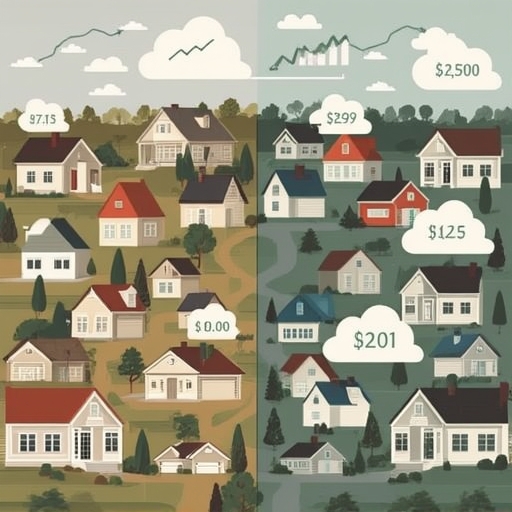
Donald Trump’s recent declaration that he intends to prohibit major Wall Street firms from purchasing residential properties has captured significant media attention and sparked renewed discussion over the intersection of finance, housing, and policy. Yet, according to market observers and industry insiders, the proposal may already be outdated. Large institutional investors—those previously criticized for buying up single-family homes in quantities that priced ordinary families out of certain markets—have quietly adjusted their strategies in recent years. Instead of aggressively acquiring detached homes at scale, they have diversified toward other real estate assets and investment instruments that align more closely with current economic and demographic trends.
This evolving dynamic highlights a broader truth about the housing market: it consistently changes faster than the political and regulatory frameworks that aim to govern it. While sweeping proposals to curtail financial institutions’ influence over housing can capture public support, they often arrive after the market has already pivoted to new models. Investment funds and real estate conglomerates now tend to focus on build-to-rent communities, multifamily developments, and partnerships with homebuilders rather than speculative bulk purchases of existing single-family homes. By the time policymakers recognize one form of market dominance, investors have already reshaped the battlefield.
As such, Trump’s call to “ban Wall Street from buying homes” can be viewed as both a politically shrewd soundbite and a reflection of lingering public frustration over housing affordability. Americans who have struggled with rising rents, bidding wars, and diminished ownership opportunities are likely to respond positively to any rhetoric that promises to level the playing field. However, experts caution that without acknowledging the complexity of modern housing finance—including the newer ways capital flows into residential construction and rental management—any policy response risks being reactive rather than transformative.
Ultimately, the question is not whether large investors should be prevented from participating in the housing sector, but how policymakers can ensure that participation fosters long-term stability and access for ordinary families. Crafting effective solutions will require deeper understanding of how market forces, technological innovation, and investment strategies continue to evolve. In a marketplace that never stands still, sustainable housing policy must stay as adaptive and forward‑looking as the investors it seeks to regulate.
Sourse: https://www.businessinsider.com/trump-ban-wall-street-buying-homes-industry-response-impact-2026-1