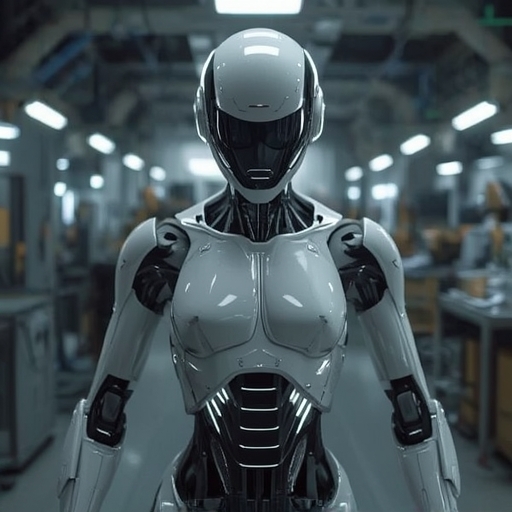
Boston Dynamics has unveiled an extraordinarily ambitious benchmark for its most advanced humanoid creation, Atlas. According to the company’s leadership, the robot must master the ability to comprehend and perform a brand‑new industrial task within an exceptionally brief period of forty‑eight hours before it can earn its position on Hyundai’s manufacturing lines by the year 2028. This objective is not merely a technical goal; it represents a transformative step in the evolution of adaptive robotics and intelligent automation.
The demand for robots capable of learning and adjusting rapidly to unfamiliar situations reflects a paradigm shift within industrial innovation. Traditional machines, once limited to repetitive pre‑programmed actions, are being replaced by intelligent systems that can interpret their environments, make autonomous decisions, and refine their performance almost in real time. Boston Dynamics is essentially challenging Atlas to demonstrate the kind of flexibility and problem‑solving capacity that more closely resembles human learning than mechanical programming.
Hyundai, functioning as both partner and proving ground, envisions a future production ecosystem in which robots and humans collaborate seamlessly. Atlas’s ability to internalize a new assembly procedure or production task within two days could potentially redefine manufacturing efficiency. Instead of requiring extensive coding or external reconfiguration, the robot would analyze the task, simulate possible approaches, and adapt its behavior through iterative learning—a process that mirrors the cognitive agility of a well‑trained technician.
For the broader field of robotics, this initiative underscores the accelerating convergence between artificial intelligence, machine learning, and industrial automation. The promise of “adaptive intelligence” within machines suggests a world where mechanical assistants no longer rely solely on human instructions but rather expand their own operational competence through observation and reasoning. When Boston Dynamics speaks of Atlas learning in forty‑eight hours, it implies a progression toward robots that are not only programmable tools but autonomous partners in innovation.
By setting such a demanding timeline and concrete goal, Boston Dynamics invites both excitement and scrutiny. Engineers, ethicists, and economists alike recognize that this achievement—if realized—will profoundly affect how industries approach workforce integration, safety standards, and productivity. It is a vision of the near future where intelligent robotics evolve from static instruments into dynamic collaborators. In essence, Boston Dynamics’ challenge to Atlas is also a challenge to the limits of human imagination regarding technology’s role in the modern world.
Sourse: https://www.businessinsider.com/huamnoid-robots-manufacturing-deployment-timeline-robert-playter-ceo-interview-2026-1