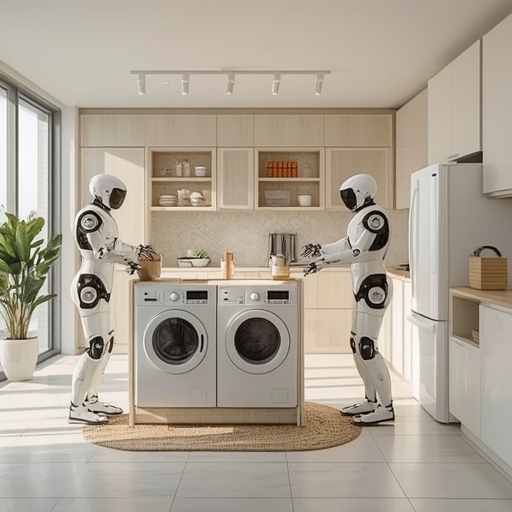
Once confined to the pages of futuristic novels and the frames of science‑fiction films, humanoid robots are now emerging as tangible, practical assistants designed to improve our everyday lives. At CES 2024, this transformation from imagination to implementation was on full display. No longer limited to performing specialized industrial tasks or laboratory demonstrations, today’s robots are being engineered with the dexterity, cognitive ability, and friendly aesthetics needed for home environments. They are not just machines; they are becoming collaborative partners capable of simplifying domestic routines.
Among the most attention‑grabbing examples were LG’s CLOiD and SwitchBot’s Onero H1—two humanoid robots conceived with household harmony in mind. CLOiD impressed audiences with its smooth motor coordination and intuitive responses, showing how advanced motion design now allows robotic systems to load laundry, fold garments, or even manage minor cooking preparations. Meanwhile, Onero H1 demonstrated a combination of compact mobility and multifunctional articulation, ideal for homes that demand adaptability and grace. Both exemplify the remarkable convergence of artificial intelligence, mechatronic engineering, and human‑centric design.
The significance of these unveilings extends well beyond mere spectacle. They mark an important transition point in consumer robotics: the move from conceptual prototypes toward viable daily companions. The machines featured at CES 2024 represented not only incremental technological progress but also a philosophical shift in how society perceives automation. These devices are designed with empathy in mind—carefully anthropomorphized to ensure approachability and comfort, reducing the psychological gap between human and machine.
Imagine a household where monotonous chores like folding laundry, preparing ingredients for dinner, or tidying up shared spaces are delegated to reliable, tireless assistants. Such automation could grant families more hours for creativity, rest, or connection. That vision, once decades away, suddenly feels imminent. While questions of affordability, safety, and social adaptation remain, the trajectory is unmistakable: humanoid robots are transitioning from curiosity pieces at trade shows into soon‑to‑be essential domestic tools.
CES 2024 effectively reframed the conversation. The essential question is no longer whether humanoid robots will be capable of handling our chores—it is how rapidly they will become integrated into our daily routines and in what forms. The age of home robotics is unfolding before our eyes, blending sleek industrial design, advanced AI behavior modeling, and practical household utility into a cohesive reality. The dream of living alongside intelligent mechanical helpers has stepped out of fiction and, quite literally, into our laundry rooms.
Sourse: https://www.theverge.com/featured-video/860104/we-tried-to-get-humanoid-robots-to-do-the-laundry