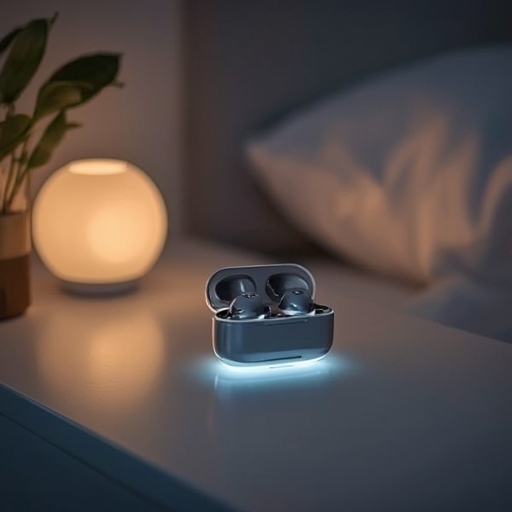
ZDNET’s latest report highlights a remarkable innovation emerging in consumer wellness technology: the NextSense Smartbuds, a new generation of earbuds that integrate sophisticated EEG (electroencephalogram) functionality to monitor and interpret brain activity. These earbuds, meticulously designed to promote and enhance restorative sleep, represent a significant leap forward in how we interact with technology that supports health and cognitive well-being. Priced at $399 and currently available for preorder, they symbolize the growing intersection between neuroscience and personal electronics.
Traditionally, EEG—the process of measuring the brain’s electrical impulses—required an intricate medical setup. In a clinical environment, around twenty electrodes are strategically placed across the scalp, each adhered using conductive gel, to capture microscopic fluctuations in neural activity. Following such a session, patients often need to thoroughly wash their hair several times to remove the residue. This process, while effective, is cumbersome and impractical for everyday use. NextSense’s innovation lies in transforming that complex procedure into an unobtrusive experience seamlessly embedded in an accessory as familiar as a pair of earbuds.
As Jonathan Berent, the CEO and founder of NextSense, explained in a 2024 blog post, few individuals would willingly visit a clinic for frequent EEG monitoring due to the equipment’s complexity and discomfort. However, many people would think nothing of inserting their regular earbuds each day. Berent’s inspiration for this endeavor arose after his Apple Watch notified him of an irregular heart rhythm—atrial fibrillation—prompting him to question why similarly accessible consumer tools did not yet exist for brain health tracking. His observation captures a growing sentiment in modern technology: that the next frontier of wearable devices involves decoding the mind as seamlessly as we now monitor the body.
The NextSense Smartbuds accomplish this by embedding three lightweight electrodes into each earbud, a dramatic reduction from the twenty traditionally required. These electrodes are crafted from a conductive polymer capable of performing what are known as “dry recordings,” eliminating the sticky gel and discomfort associated with traditional EEGs. While this consumer-grade approach cannot provide the clinical precision required in medical diagnoses, it opens a new realm of data accessibility, offering users previously unavailable insights into their neural and sleep patterns.
Beyond their impressive sensing capabilities, the Smartbuds also serve familiar purposes. Like other sleep-oriented earbuds, they offer a range of soundscapes and customizable audio tracks designed to help listeners relax, drift off, or remain focused. Users may also stream their preferred music, podcasts, or audiobooks through the same device, ensuring versatility beyond bedtime. Once the wearer transitions into deep sleep, the system activates a feature known as slow-wave enhancement, which utilizes carefully tuned pink noise to guide brain activity toward generating more restorative slow waves. According to Caitlin Shure, NextSense’s head of product, this process allows users to maximize the quality and restorative power of their sleep without necessarily extending the length of time spent in bed.
Another dimension to this innovation lies in its potential beyond nighttime use. Shure hinted that upcoming software updates and integrations will introduce daytime functionalities designed for scenarios like work, study, or exercise. By continuously gathering brainwave data throughout different activities, the earbuds may soon offer insights into mental states such as focus and cognitive engagement, thus transforming them into a multi-purpose neural interface device rather than a sleep-only accessory. Battery performance currently ranges between seven and ten hours, depending on activity levels and feature usage, balancing efficient power consumption with extended usability.
Set to ship in February, the Smartbuds mark a decisive step in how consumer technology blends neuroscience with lifestyle enhancement. They represent more than just a clever adaptation of medical technology—they are part of a broader movement in wearable tech that seeks to decode human physiology in real time, offering people intimate feedback about their mental and physical states. In the near future, slipping in a pair of earbuds like these might not only provide music or comfort but also a personalized window into the rhythms of the human brain itself.
Sourse: https://www.zdnet.com/article/nextsense-smartbuds-ces-2026/