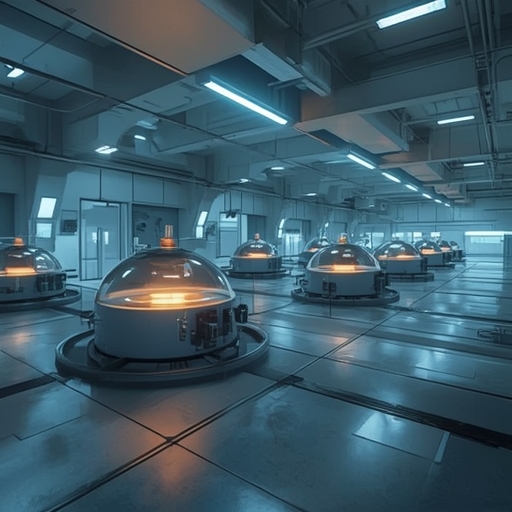
In recent years, nuclear power—once considered an outdated and politically fraught technology—has found itself at the center of renewed enthusiasm, largely thanks to the emergence of small modular reactors (SMRs). These compact and ingeniously engineered systems represent a radical shift from the traditional model of massive, one-of-a-kind plants that take decades and billions of dollars to construct. Instead, SMRs focus on scalability, standardization, and efficiency. The core idea is strikingly simple yet potentially transformative: by designing smaller, factory-built nuclear reactors that can be produced in series rather than customized at each site, developers hope to reduce the prohibitive costs and lengthy timelines that have historically plagued the industry.
Startups and innovators leading this resurgence envision a future where modular reactors can be shipped and assembled like high-tech building blocks. The efficiencies of mass production, in theory, could make nuclear energy more economically competitive with renewable sources such as solar and wind, while maintaining the advantage of providing constant, emission-free electricity. This approach also addresses one of the nuclear industry’s most persistent criticisms—its lack of flexibility—by allowing facilities to scale power gradually based on regional demand.
Yet, this revival is not without its share of formidable obstacles. Technical and regulatory complexities remain daunting. Designing a miniaturized nuclear reactor that meets the world’s most stringent safety requirements without sacrificing performance or affordability is no small feat. Financing, too, poses a major challenge. Investors and governments are cautiously weighing whether SMRs can deliver the promised returns, particularly as early prototypes demand substantial funding before any proven commercial output is achieved. Public perception adds another layer of difficulty: memories of past nuclear incidents continue to color popular opinion, and convincing communities to embrace new nuclear technology—even on a smaller scale—requires deep transparency and trust-building.
Proponents argue that these challenges, while real, are not insurmountable. They emphasize that SMRs could serve as a vital complement to renewable energy, offering steady power generation when solar panels and wind turbines go dormant. In an era of urgency around carbon reduction and climate resilience, the potential role of modular nuclear systems in achieving a net-zero future is not easily dismissed. Critics, on the other hand, warn that optimism must be tempered with realism. Scaling new designs safely, navigating complex licensing frameworks, and ensuring long-term waste management demand extraordinary attention, innovation, and patience.
Ultimately, small modular reactors embody both the hope and the tension that define the modern energy transition. They symbolize technological audacity—the belief that human ingenuity can reimagine even the most intricate legacies of industrial infrastructure. Whether SMRs will indeed revolutionize clean energy or remain an ambitious experiment in engineering remains to be seen. What is certain is that the conversation has shifted. Nuclear power, once relegated to the margins of policy debates, is again being discussed as a serious—and potentially essential—component of a sustainable future. The question is no longer whether nuclear can return, but how—and at what cost—it will shape the global pursuit of cleaner, smarter power.
Sourse: https://techcrunch.com/2026/01/11/nuclear-startups-are-back-in-vogue-with-small-reactors-and-big-challenges/