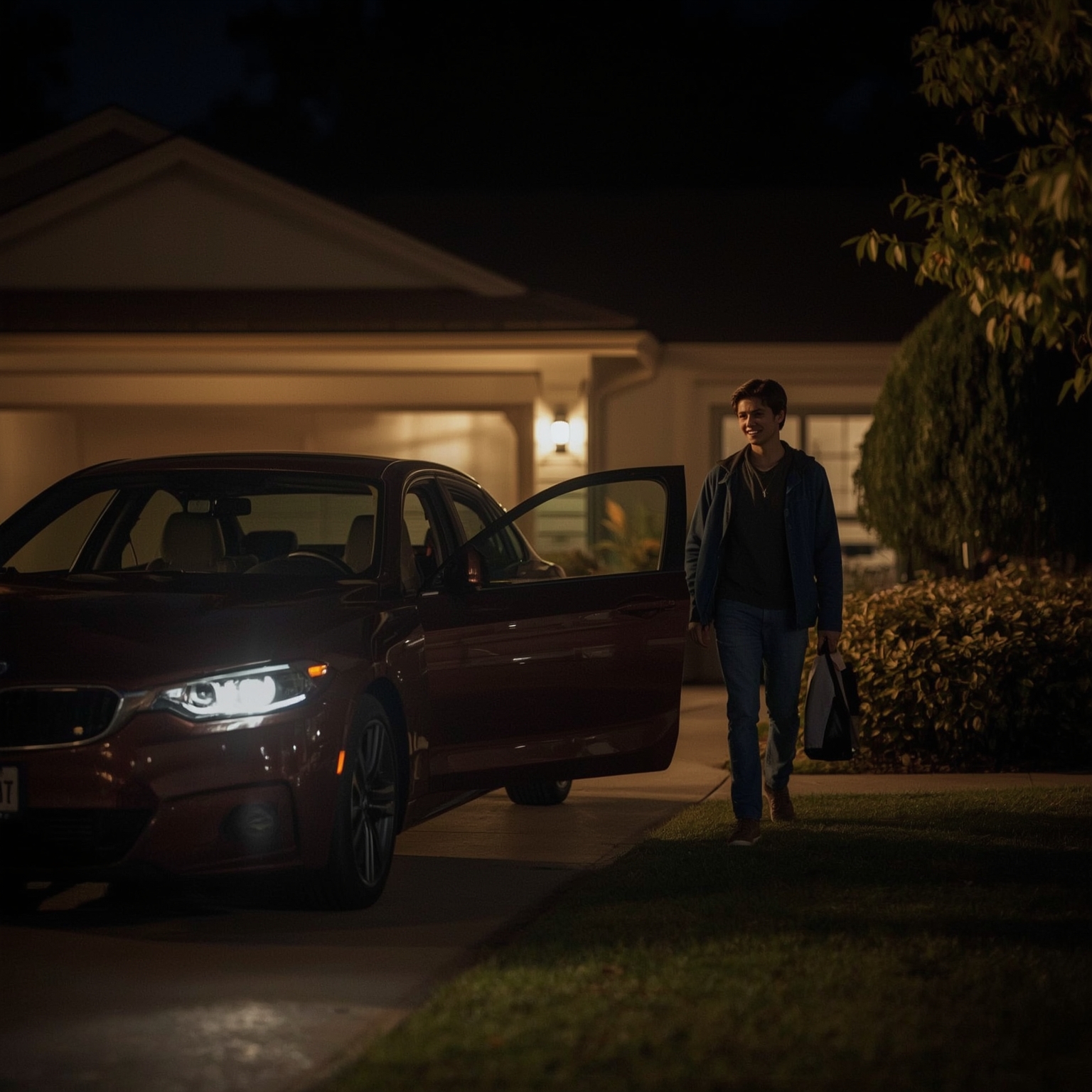
When one of my teenage sons sends a text message from a sleepover asking if I can come collect him, there is never even a flicker of hesitation on my part. I do not press him with questions, I do not impose guilt or suggest he should endure the situation, and I certainly do not demand explanations. From the very beginning of our parenting journey, my husband and I established a clear and unwavering rule: if our children wish to come home, regardless of the circumstances, they simply need to let us know and we will be there, without judgment and without delay. Whether they are down the street at a neighbor’s house or across town with close friends, whether it is the middle of the evening or the early hours of the morning, their request alone is sufficient. We want them to know that home is always an option, one that does not require justification.
Perhaps the reason is subtle — a gut instinct that something feels unsettling, a wave of social exhaustion after hours of interaction, or simply a longing for the peace of their own familiar bed. No matter the cause, the words “Can you come get me?” represent a complete and valid answer in themselves. We want our sons to feel absolute security in the knowledge that they can step away without offering a rationale, preserving their autonomy and reminding them that their comfort matters above expectations.
This philosophy is particularly significant to me because, for many years, I personally harbored deep reservations about sleepovers. When my oldest son first began receiving invitations in kindergarten, I found it almost impossible to embrace the concept of him spending the night under someone else’s roof. I would not have described myself as anti-sleepover in so many words, yet my actions revealed exactly that, as I repeatedly found reasons to decline offers or insist on picking him up before bedtime. Our arrangement often became a sort of half-measure: the boys would spend the evening at a friend’s house, enjoying games and companionship until night settled in, but as bedtime approached we whisked them home so that they drifted off to sleep in the safety of their own rooms. I did not view this as a rejection of other parenting styles, nor was I critical of families who welcomed overnight guests—I simply could not surrender that aspect of care at such a young age.
This caution, though perhaps excessive by some standards, is shaped profoundly by my own childhood. As a mother who grew up in the 1970s and 1980s, I vividly remember sleepovers that were, in retrospect, surprisingly unmonitored. Parents often withdrew behind the sanctuary of their own bedrooms or, astonishingly, even left the premises altogether, leaving children effectively unsupervised. In their absence, we ventured freely into activities that were highly inappropriate for our ages—plopping in front of R-rated films, dialing strangers with prank calls, and, on occasion, slipping unauthorized tastes from an unattended liquor cabinet. Adults rarely intervened or even checked on us. While some of these escapades still carry the haze of nostalgia, the absence of oversight now strikes me as reckless and unsettling. Such scenarios, which were once ordinary, feel unimaginable today.
As a child inhabiting those moments, I sometimes felt profoundly uncomfortable. There were instances when the atmosphere shifted from fun to anxiety, when the walls of another family’s home did not feel protective. Yet, despite my unease, it never occurred to me—or anyone in my circle of friends—that calling home for an early pickup was acceptable. Doing so would have implied weakness, immaturity, or failure. That lack of an outlet weighed on me, and it is precisely why, as a parent, I have chosen a different path. I want my children to experience an unwavering sense of safety that I did not always have, supported by the unspoken but ever-present assurance that they can leave whenever they feel the need.
As the years have passed and I have become better acquainted with the families of my sons’ friends, some of my initial rigidity has softened. My children, now navigating the age of 13 and 15, are no longer the small boys who clung to routines but rather adolescents developing a clearer understanding of their boundaries, values, and desires. Interestingly, in many cases, they now decline sleepovers entirely of their own accord, demonstrating discernment long before I intervene. They often prefer the compromise of enjoying the companionship of friends in the evening and then requesting a ride home when festivities fade. It is less about missing out and more about recognizing what brings them contentment.
One particular evening illustrates this balance perfectly. My older son had agreed to spend the night at a gathering that was billed as a sleepover. Yet, around 11 p.m., a message arrived on my phone: “Can you come get me?” There was no preamble, no explanation required. Within minutes we were in the car, and when he walked through our front door, he was not distressed or upset; he simply looked weary and eager for solitude. I understood that feeling intimately. Although I delight in travel and social interactions myself, at the end of any journey I long to settle back into the comfort of my own possessions and my own bed. He was expressing the same sentiment, in his teenage way.
A week later, the same son participated in a completely unplanned sleepover with three of his closest friends. This time, he went with nothing packed—no change of clothes, no toothbrush, not even a sleeping bag. It mattered little. The spontaneity matched the lighthearted tone of the gathering, which extended seamlessly from an all-day social hangout into an overnight adventure and then into the next afternoon. There was no drama, no concerns about what had been forgotten, only the pleasure of continued camaraderie. To me, this was a poignant reminder of an important truth: independence is not always equated with testing limits, pushing boundaries, or adhering rigidly to expectations. Sometimes independence manifests as the wisdom to choose comfort over convention, or the flexibility to embrace a spontaneous night with trusted companions. I take joy equally in his ability to opt out or opt in, knowing that both decisions are grounded in self-awareness.
As I reflect on these milestones, I find reassurance in recognizing how capable my children are becoming in charting their own courses. While I do not categorize myself as a so-called “helicopter parent,” I admit that I orbit closely, maintaining a form of gentle vigilance. My hovering is not intended to dominate their choices but to remain readily available, a constant source of support. My purpose is to instill in them the repeated reminder that they possess agency over their environments, that they are never obligated to conform if something does not feel right, and that they always have the freedom to reverse a decision. In small, safe situations—such as the choice to leave a sleepover—they rehearse the invaluable practice of voicing discomfort. The hope is that when larger, weightier dilemmas arise in adulthood, the ability to say “this situation is not for me” will already be embedded deeply within them.
Now, as adolescence steadily progresses into the threshold of young adulthood, I find myself carefully negotiating the equilibrium between stepping back and holding close. I strive not to stifle their independence with overprotection, but equally, I want them to carry the enduring knowledge that they will never be entirely alone. Whether it is at 10 p.m. after an evening with friends, or in the dead of night at 3 a.m. during college years, I want my sons to know beyond a doubt that the lifeline of a call home will always be met with a steadfast response. To me, it is not an inconvenience; it is the embodiment of family.
Some outside observers might misinterpret a teenager abandoning a sleepover as evidence that the young person is overly dependent, clinging to the safety net of parental intervention. I take an entirely different perspective. To me, these choices demonstrate genuine independence—a willingness to acknowledge and act upon one’s own emotional needs, a refusal to succumb to peer pressure, a mature assertion of individuality. My part in this equation is simple: keeping my phone close at hand and my car keys ready. Because, ultimately, home is not merely a physical dwelling; it is an enduring promise of refuge, reassurance, and unconditional welcome.
Sourse: https://www.businessinsider.com/teen-texted-middle-of-the-night-get-him-from-sleepover-2025-9