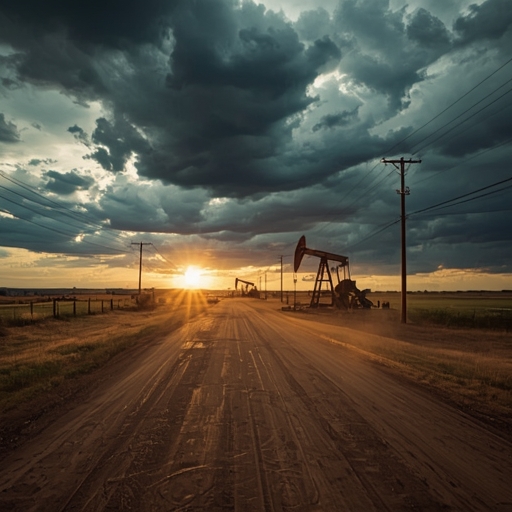
In Midland, Texas, the phenomenon of declining oil prices represents a paradox that deeply affects both individuals and entire communities. What, on the surface, appears to be good news for consumers across the country — lower prices at the gas pump and reduced transportation costs — reveals a far more complicated reality for those who call this oil-dependent region home. The benefits of cheap fuel seldom outweigh the hidden strains imposed on the local workforce and businesses that sustain themselves on the volatile energy economy.
For drivers and households far removed from the oil fields, a dip in fuel prices often feels like a welcome relief, offering short-term savings and a sense of economic ease. In stark contrast, however, the very same decline spells hardship for the people and enterprises whose livelihoods are tied to oil extraction and production. When global markets pivot, energy workers in Midland face layoffs, pay cuts, or a slowdown in drilling operations, diminishing local revenue and shaking confidence in the future of the region’s economic vitality. The town’s prosperity, so firmly intertwined with the value of oil, becomes vulnerable to every global fluctuation.
This recurring dynamic — a familiar boom-and-bust cycle — has long defined Midland’s identity. Periods of high demand and rising prices bring prosperity, expansion, and opportunity: streets fill with new businesses, housing developments emerge almost overnight, and optimism saturates the air. Yet when prices plunge, the downturn strikes swiftly, undermining that same optimism with job losses, stalled projects, and the stark realization that prosperity built on a single resource is precarious at best. Families who thrived during the booms must now tighten budgets, and local governments dependent on energy revenue suddenly grapple with shrinking tax bases.
Beyond the economic ripples, the psychological impact on the community cannot be ignored. There exists a collective memory among longtime residents — a lived understanding that every surge of prosperity carries within it the seeds of the next decline. This awareness fosters both resilience and fatigue: resilience, because the people of Midland have endured these cycles before and learned to adapt; fatigue, because each downturn erodes a measure of hope that the pattern might someday change. The so-called blessing of affordable oil for consumers elsewhere, thus, feels like a burden for those standing at the industry’s frontline.
The larger implication of this tension between global forces and local consequences highlights an essential truth about modern economies: markets are interconnected, but their benefits are not evenly distributed. Midland becomes a microcosm of this imbalance — a place where the price of convenience for millions translates into economic uncertainty for thousands. The city’s experience underscores the urgency of building a more sustainable and diversified economic foundation, one less beholden to the unpredictable tides of energy markets.
In the end, Midland’s story serves as both a caution and a call to reflection. It reminds us that what appears ‘cheap’ in one context may exact a high cost in another. Behind every gallon of discounted fuel stands a community negotiating the difficult trade-offs between prosperity and precarity, boom and bust, opportunity and loss. In this way, the drama of global oil prices is not merely an abstract market fluctuation—it is a profoundly human narrative playing out in real time across the desert plains of West Texas.
Sourse: https://www.wsj.com/business/energy-oil/oil-prices-jobs-midland-texas-2a818d55?mod=pls_whats_news_us_business_f