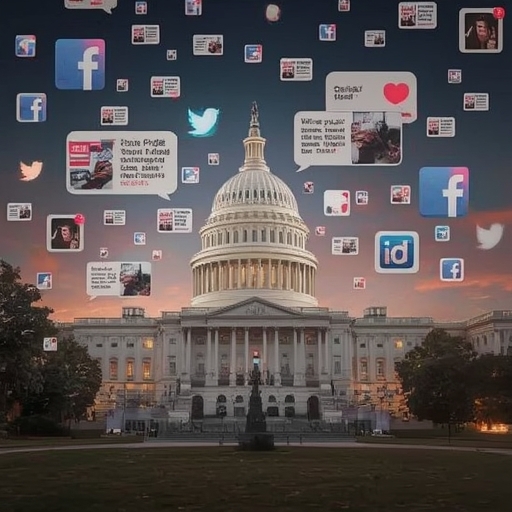
In recent months, the White House has begun participating in what the internet affectionately calls “shitposting,” a style of online expression that blends irreverent humor, cultural commentary, and carefully crafted chaos. Yet what appears, at first glance, to be a series of casual or comical social media posts, is actually a meticulously conceived form of modern-day political messaging. These posts signify more than just the adoption of meme culture—they reveal a broader evolution in how institutions communicate in the digital age.
By embracing the unpredictable energy of internet humor, government communicators acknowledge that traditional press releases and formal statements no longer hold the same persuasive power they once did. Modern audiences, especially younger generations accustomed to scrolling through saturated feeds of entertainment, irony, and self‑referential jokes, demand messages that feel authentic, conversational, and native to online life. When an official political account uses pop‑culture references, self‑deprecating humor, or viral meme formats, it is not merely participating in digital banter—it is deliberately engaging in narrative control within the cultural language of the present moment.
This shift illustrates a deep understanding of how information now travels: rapidly, chaotically, and socially mediated. In an environment where perception often shapes political reality, mastering the idioms of the internet becomes an act of strategic influence. Memes can compress complex policies into instantly shareable visual shorthand, while humor disarms skepticism and fosters a feeling of inclusivity between institutions and their digital audiences. Each tweet, GIF, or caption is therefore simultaneously a joke and a message—an informal artifact of political persuasion disguised as entertainment.
Furthermore, this approach reflects a growing recognition that online platforms are not only arenas of publicity but also battlegrounds for attention and legitimacy. By operating fluently within meme culture, public institutions can speak directly to the emotions, frustrations, and cultural expectations of citizens whose trust in traditional communication has eroded. In essence, when the White House adopts the linguistic style of the timeline, it signals that the future of political engagement will depend less on formality and more on cultural fluency. The art of “shitposting,” once considered trivial, has become an effective rhetorical tool in a society where wit travels faster than policy papers, and humor, when executed with precision, can move the discourse of a nation.
Sourse: https://www.theverge.com/column/861476/trump-memes-venezuela-ice-shooting