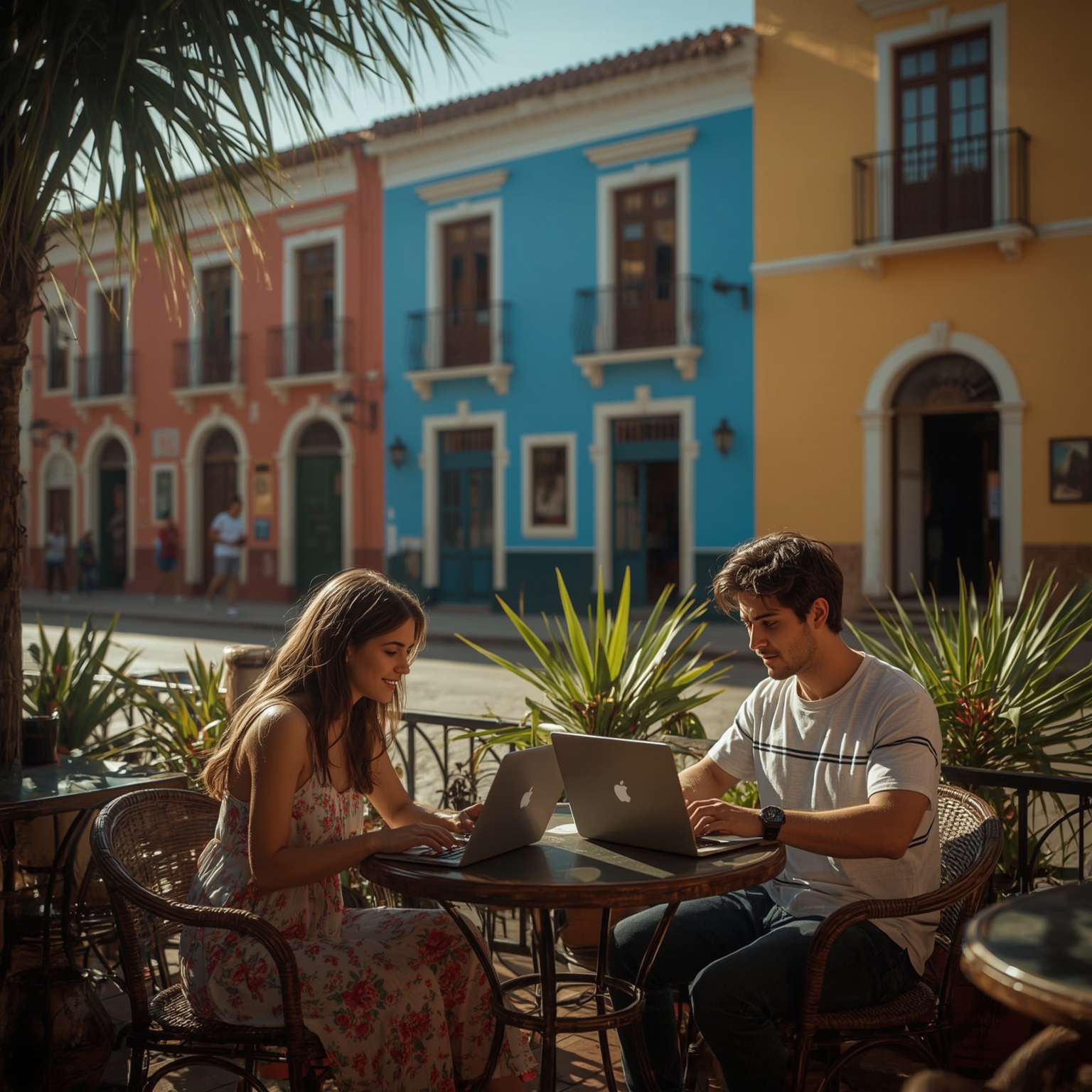
Like countless dreamers before me, I packed my life into suitcases and moved to New York City, lured by the promise of reinvention, professional success, and the almost cinematic fantasy that urban life there could resemble something out of a Nora Ephron film. Yet, in the aftermath of the 2024 election—a moment that coincided with a disconcerting rise in anti-Latino sentiment across the country—I began to feel unmoored in a way I had not expected. As a woman of Hispanic heritage, this cultural climate carried particular weight, making me question where I belonged. At the same time, the escalating financial reality of New York became increasingly impossible to ignore. Even though my fiancé and I were both solidly employed and living the so-called DINK lifestyle—dual income, no kids—the relentless costs of existing in a city with one of the highest costs of living in the world left us perpetually burdened and anxious.
One evening, while scrolling absently through social media in search of distraction, I stumbled upon a video of a couple who had recently relocated to Spain with their cat. Intrigued, I began following their journey. From there, I found myself slipping into a digital rabbit hole teeming with stories of individuals and families who had left the United States behind in pursuit of a more fulfilling or sustainable life abroad. Their examples planted a seed: if they could successfully leap into a new lifestyle, then why couldn’t we? The question lingered until it crystallized into a decision. After much consideration and planning, our eyes turned southward. Mexico became our chosen starting point—not simply because of its affordability compared to other options, but also because the country held deeply personal significance for me, being the birthplace of my grandparents and a culture to which I felt a growing need to reconnect.
Making this shift required difficult choices. While my fiancé had the flexibility to continue working remotely, my professional reality was different. I would need to resign from my established corporate role—a position that, on paper, represented stability but in practice had eroded my health and happiness, ultimately leaving me creatively depleted. Abandoning the security of a consistent paycheck and robust health benefits was frightening, yet the decision felt inevitable; what had once been a dream job had metamorphosed into a source of burnout. With those realizations heavy in mind, I quit. We arranged the necessary logistics for moving our cat across international borders, placed most of our belongings into storage, and relinquished our Brooklyn apartment. With no small amount of trepidation, we leapt into the unknown.
Our journey commenced in Puerto Escondido, a tranquil coastal town in Oaxaca acclaimed for its radiant turquoise waters and serene pace of life. Almost instantly, I felt as though time had slowed. Locals and international settlers mingled with ease, and I found myself captivated by how naturally the rhythm of the community welcomed us. The financial relief was equally striking: groceries from the local marketplace cost a fraction of what we once spent weekly in New York, with enough fresh produce and essentials to last seven days priced around $35. Dining out transformed from a rare indulgence into something we could genuinely enjoy often, given that meals—even of remarkable quality—were affordable in contrast to the prohibitive costs of Manhattan restaurants. More importantly, however, my creativity, long dormant under the weight of corporate exhaustion, began to reawaken. For the first time in years, I felt an ember of inspiration spark to life.
Each day followed a gentle rhythm of its own: I would start mornings unhurriedly, diving into the Airbnb’s modest pool before preparing breakfast, then spending several hours at a local co-working space on freelance projects until mid-afternoon. My evenings closed with sunsets at the beach, the vibrant sky recasting the shoreline in hues I found infinitely restorative. Freed from the pressure of rushing to an office or aligning myself with rigid schedules, I began to heal. Puerto, in a quiet and almost imperceptible way, gave me back a sense of self I hadn’t realized I had lost.
But travel, of course, is rarely without its challenges. After two restorative weeks in Puerto Escondido, we shifted to the bustling heart of Mexico City, where life took an unexpected turn. Shortly after arriving, my fiancé experienced an alarming health scare. Though our Spanish remained serviceable at best, we managed to locate an urgent care clinic, where the staff’s patience and professionalism helped us navigate the situation with surprising ease. We were examined and treated swiftly, and the out-of-pocket expense—approximately $250, given the exchange rate—stood in glaring contrast to the likely thousands such a visit would have cost us in the United States. The incident was frightening but instructive, reinforcing our conviction that we were capable of managing the unforeseen difficulties bound to arise when living abroad. Once my fiancé recovered fully, we resumed our journey with renewed determination and a deeper sense of adaptability.
Yet, not all the difficulties we encountered were so tangible. The less visible challenge was the persistent ache of dislocation—the loneliness that accompanies extended travel. While the freedom of movement thrilled me, it also underscored how destabilizing it can be to lack a permanent base and to exist away from a familiar social network. My fiancé naturally became my primary, near-sole source of emotional support, which strained us in moments when stress ran high. In New York, we had close friends, small safety valves that allowed us to vent frustrations or celebrate wins over casual coffees or late-night drinks. On the road, those outlets were absent, and our shared reliance on one another sometimes amplified tension. Despite those strained moments, however, we found ways to confront our frustrations with honesty and care. Through heartfelt conversations and self-reflection, we discovered opportunities to grow closer, viewing each challenge not as a threat, but as a tool for greater understanding.
Eventually, after more than six weeks abroad, we returned temporarily to the United States. These weeks back home provided a contrasting kind of nourishment: reconnecting in person with friends and family, revisiting commitments we had left suspended, and grounding ourselves emotionally after the flux of travel. Yet the time in Mexico had planted an enduring vision for our future. While we may have pressed pause on nomadic life for the moment, our first taste of it proved transformative—an experience that stretched us beyond what we expected, revealing resilience, adaptability, and clarity. It gave me permission to grant myself grace, to welcome growth even when it felt uncomfortable, and to view uncertainty not simply as a burden, but as an invitation to expand.
Now, as we look forward, our ambitions remain unwavering: to reembrace travel as full-time digital nomads. There are, of course, practical hurdles to surmount, from visa considerations to longer-term planning, but these obstacles feel conquerable in light of what we’ve already experienced. We intend to resume our travels in the fall, a compass pointing outward, the only question left being where in the wide world we will land next.
Sourse: https://www.businessinsider.com/americans-tried-living-abroad-mexico-lessons-proved-we-could-2025-9