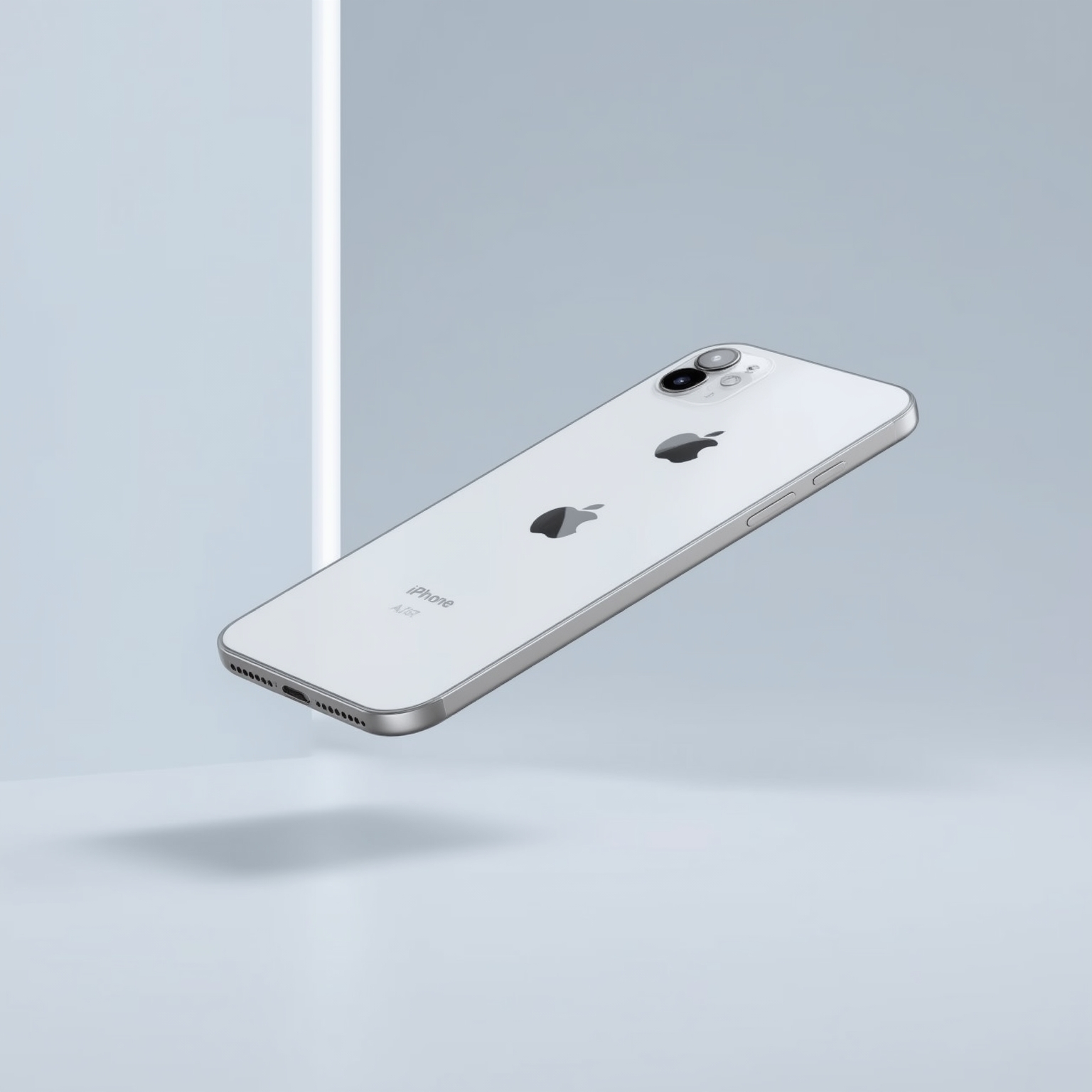
This week, Apple unveiled a striking new addition to its lineup, a device that immediately captured attention for its unprecedented slimness: the iPhone Air. Measuring an astonishing 5.6 millimeters in depth, the handset is so slender that, in its introductory promotional video, it appears to balance effortlessly upon a fingertip, almost as though it were lighter than air itself. This launch was not merely another routine showcase but the centerpiece of Apple’s highly anticipated fall event, where the company underscored the phone’s audaciously minimal dimensions and yet its commitment to resilience and strength. The presentation highlighted Apple’s ability to merge extreme elegance of form with lasting durability, a balance that many thought impossible to achieve at this scale.
Speaking directly about the device’s striking delicacy, CEO Tim Cook remarked in an interview with *The Wall Street Journal* that holding the iPhone Air produces the uncanny sensation that it might simply drift away from one’s grasp. Such words reinforce the almost ethereal impression the device projects—technology refined into an art form that is both nearly weightless and reassuringly solid.
The design evolution is notable when the iPhone Air is placed into historical context. Apple’s earlier models varied widely in thickness, contour, and proportions. For instance, the original iPhone, which debuted in 2007 and was distinguished by its curved edges and iconic silhouette, was comparatively hefty at 11.6 millimeters. Years later, the iPhone 6 briefly held the title of Apple’s slimmest creation at 6.9 millimeters, earning acclaim at the time for its refined engineering. Now, the iPhone Air has eclipsed that achievement with a profile reduced by more than a full millimeter. Meanwhile, Apple’s newly announced iPhone 17 sits within familiar territory at 7.9 millimeters, evidencing how the company has shifted dimensions back and forth but always with purpose in mind. Over time, depth has proven to be one of the most variable attributes in the estate of iPhone design, oscillating between compactness and the demands of hardware capability.
Despite the iPhone Air’s featherlike weight of only 5.8 ounces, Apple executives have expressed profound confidence in its robustness. That assurance was put to the test in a demonstration published on Thursday, when Greg Joswiak, Apple’s Senior Vice President of Worldwide Marketing, theatrically invited observers and interviewers to attempt to bend the razor-thin device. Rather than yielding under pressure, the phone retained its structure, suggesting that careful engineering choices had fortified even such a delicate-seeming framework. Echoing this sentiment, John Ternus, Apple’s Senior Vice President of Hardware Engineering, declared in the same interview that the Air surpasses every previous iPhone in durability, setting a new internal benchmark for strength alongside minimalism.
This accomplishment carries even greater weight when viewed in light of Apple’s past challenges. The company is keenly aware of the criticisms that surfaced a decade ago during the so-called “bendgate” controversy in 2014, when certain models of the iPhone 6 and iPhone 6 Plus were found to be vulnerable under moderate bending forces. By emphasizing resilience this time, Apple signals that it has not only learned from previous incidents but has also invested substantial effort to preempt similar concerns. Integral to this reinforcement is the introduction of titanium into the iPhone Air’s construction—a choice of material that, according to Ternus, contributes significantly to the phone’s expanded durability while also maintaining its impossibly light character.
Naturally, aesthetic marvels do not stand apart from pricing considerations. The iPhone Air will begin at $999, positioning it two hundred dollars above the starting cost of the new iPhone 17 base model. Preorders begin promptly on Friday, indicative of Apple’s push to channel immediate consumer enthusiasm into sales, while those wishing to examine and handle the Air in person will need to await its official arrival in retail stores on September 19.
Of course, while physical depth can capture headlines, prospective buyers weigh numerous other dimensions when evaluating a smartphone. Battery longevity, camera performance, and price play indispensable roles in the decision-making process. Apple has accordingly emphasized that the iPhone Air, in addition to its radically slim profile, is engineered with a powerful 27-hour battery life. To supplement this, the company is offering a dedicated MagSafe-compatible battery accessory, catering to heavy users who require even longer endurance without compromising the phone’s minimalist form.
Apple characterizes the debut of the iPhone Air as nothing short of an achievement born of years of conceptualization, refinement, and tireless engineering ambition. As Alan Dye, Apple’s Vice President of Human Interface Design, explained to *The Wall Street Journal*, the device embodies a significant stride toward the ultimate vision long articulated by Apple’s co-founder Steve Jobs: the dream of creating a smartphone that, in essence, resembles a seamless single pane of glass. In this sense, the iPhone Air is not merely the thinnest phone Apple has ever crafted—it represents a landmark progression toward a future design ideal, blending the precision of advanced manufacturing with the aesthetic purity of minimalist philosophy.
Sourse: https://www.businessinsider.com/how-apple-iphone-air-thinness-compares-to-other-models-2025-9