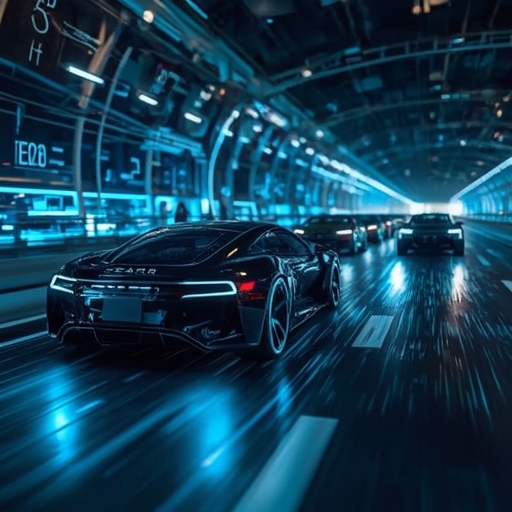
Across the rapidly transforming landscape of global automotive innovation, Chinese electric vehicle manufacturers are emerging not merely as competitors but as formidable pioneers fundamentally reshaping the industry’s trajectory. Once considered late entrants into the electric mobility sphere, these companies have now decisively moved ahead, surpassing even established giants such as Tesla in several critical dimensions of growth and adoption. Their success extends far beyond domestic boundaries; it reverberates across continents, challenging long-standing assumptions about where the epicenter of innovation, affordability, and mass production truly lies.
What makes this development particularly compelling is the extraordinary pace at which Chinese EV producers have navigated and often neutralized traditional obstacles that have constrained their international counterparts. Despite the imposition of tariffs and trade barriers designed to restrict the flow of foreign-made vehicles into certain markets, Chinese electric cars have maintained their upward momentum. This resilience stems not only from aggressive pricing strategies and economies of scale but also from a deep commitment to research, technological integration, and advanced manufacturing. Their vehicles often incorporate next-generation battery systems, intelligent software capabilities, and design elements that merge aesthetic efficiency with sustainability.
Meanwhile, global demand for clean, energy-efficient transportation continues to accelerate, driven by policy incentives and rising environmental awareness. In this climate, Chinese automakers have seized a defining opportunity: to supply high-performing vehicles that meet both consumer expectations and ecological demands. The rapid innovation cycles within China’s industrial ecosystem allow these manufacturers to respond to shifting market dynamics faster than traditional automakers burdened by legacy processes. Tariffs, once considered a significant deterrent to global expansion, have proved insufficient to decelerate this surge in electric mobility. Instead, they underscore the determination of an industry intent on achieving global parity—or even superiority—through technological sovereignty and sustainable production models.
This unprecedented rise inevitably raises broader questions about the future of international trade and sustainable mobility. If Chinese EVs continue their current ascent, conventional market leaders will need to rethink strategies involving supply chains, innovation timelines, and pricing structures. The evolution of this competition may determine not only the next chapter in the automotive industry but also the balance of power between nations that shape the green economy. In essence, China’s electric vehicle revolution is doing more than disrupting—it is redefining what progress, leadership, and environmental responsibility mean in the twenty-first century.
Sourse: https://www.wsj.com/business/autos/china-cars-tariffs-byd-tesla-fa18066f?mod=pls_whats_news_us_business_f