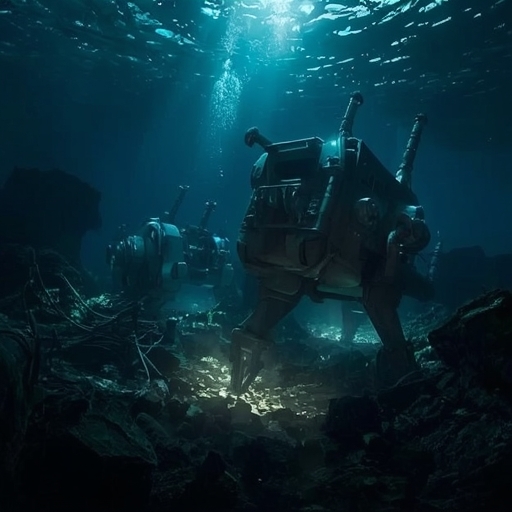
The United States has embarked on an ambitious and contentious initiative to expedite the approval process for deep‑sea mining operations, an effort designed to accelerate access to the immense mineral wealth lying far beneath the ocean’s surface. This governmental move, framed as a strategy to secure vital raw materials essential for the next generation of technology and clean‑energy infrastructure, has set off an intense debate within environmental, industrial, and policy circles. At its core, the decision highlights a profound tension between economic opportunity and ecological preservation.
By streamlining permits for exploration and extraction in international waters, the U.S. seeks to position itself at the forefront of a new global resource frontier. Advocates argue that such action will help reduce dependence on terrestrial mining, lessen geopolitical vulnerability surrounding rare‑earth supply chains, and stimulate innovation in sustainable mining technologies. They envision an era in which the deep ocean becomes a critical contributor to green progress, powering electric vehicles, renewable‑energy systems, and advanced electronics through materials harvested beneath the waves.
However, this acceleration raises formidable ethical and environmental questions. Marine biologists and conservationists caution that the deep sea represents one of Earth’s least understood ecosystems—an ancient, fragile realm where life evolves in near‑total darkness under crushing pressure. Any industrial intrusion, they warn, could cause irreversible disruption, destroying habitats that have taken millennia to form and potentially wiping out species not yet discovered. The silt plumes generated by mining equipment, for example, may spread across wide regions, smothering delicate organisms and altering oceanic chemical balances in ways scientists cannot yet predict.
Policymakers and international observers are likewise grappling with broader implications for global governance. Since much of the ocean floor lies beyond national jurisdiction, questions of ownership, equity, and accountability loom large. Should profit‑driven private corporations be given rights to exploit shared natural resources? Who bears responsibility if ecological harm transcends borders? Proponents call for updated frameworks that balance innovation with stewardship, suggesting rigorous environmental assessments and transparent oversight mechanisms.
In essence, the U.S. decision to fast‑track deep‑sea mining permits could reshape not only the ocean floor but also the geopolitics of resource acquisition and environmental ethics. It invites society to confront a pivotal dilemma: whether humanity can harness technological ingenuity to explore responsibly, or whether haste and economic ambition will once again push natural frontiers beyond recovery. The conversation now unfolding is as deep and turbulent as the abysses it seeks to exploit—a dialogue in which our collective choices will determine the future equilibrium between progress and preservation.
Sourse: https://www.theverge.com/news/864916/deep-sea-mining-trump-fast-track-permits-battery-minerals