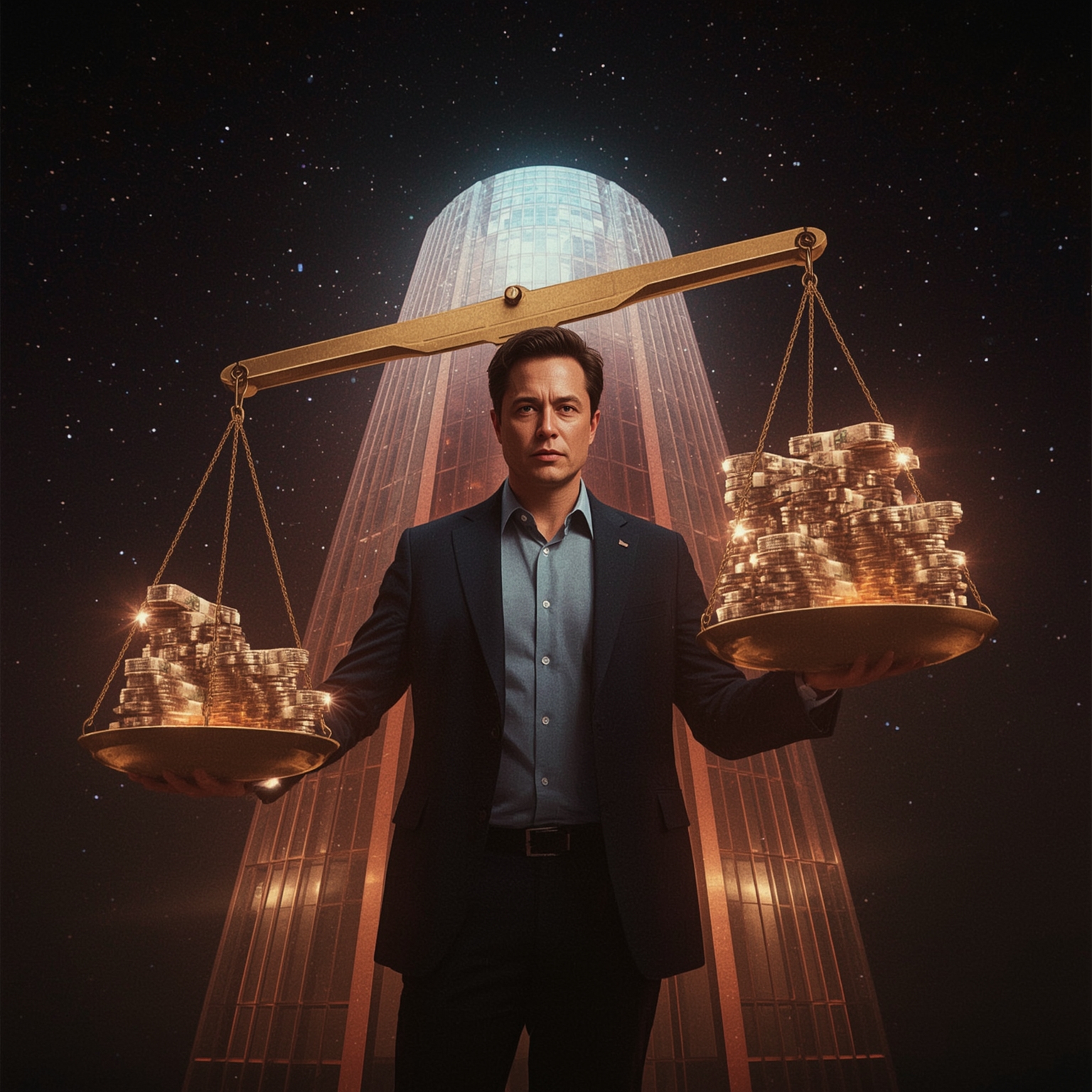
As Tesla’s shareholders prepare to cast their votes this coming November on a proposed executive compensation plan of unprecedented magnitude—a 10-year arrangement that could, in theory, yield up to one trillion dollars for Chief Executive Officer Elon Musk—board chair Robyn Denholm delivered strong public remarks in an interview with *The New York Times*. Her comments not only sought to justify the logic behind what would constitute the single largest compensation package in the annals of corporate governance, but also to reframe the debate that has drawn both fascination and criticism across business and financial circles.
Denholm, who played a direct role in shaping the ambitious proposal through her participation on the special committee tasked with crafting the plan, laid out the rationale with deliberate emphasis. She explained that Musk, whose achievements already extend well beyond conventional executive success, should be incentivized not by incremental rewards but by unique, transformative challenges. According to her, there is a necessary symmetry between the scale of the incentives offered and the monumental objectives Tesla hopes to achieve in the coming decade. Strikingly, she also emphasized that Musk’s true interest may not lie in the additional personal wealth that would flow from the distribution of Tesla shares should he meet those targets. Instead, she suggested that his primary motivation rests in the corresponding increase of voting power within the company, which would strengthen his ability to direct Tesla’s strategic trajectory without dilution of influence. As she candidly remarked, the broader conversation tends to focus narrowly on the monetary figure—a trillion dollars—yet, in her words, the more relevant issue is the influence and control that accompany such an arrangement. The newspaper further observed that at moments during the interview, Denholm appeared somewhat uneasy, reflecting perhaps the contentious nature of the subject.
On the surface, critics point out that the timing of such a vast compensation plan appears paradoxical, if not contradictory. Tesla has recently faced visible declines in profitability as well as reduced vehicle sales, and such downward trends would seem to challenge the justification for an extraordinary financial promise to its leader. However, Denholm firmly rejected that line of criticism. In her view, the intent of the package is prospective rather than retrospective; it is designed not as a reward for what has already been accomplished but as a motivator for what still lies ahead. She stressed unequivocally that Musk stands to earn nothing unless he meets the ambitious performance milestones that have been built into the plan. For Denholm, this arrangement epitomizes a philosophy that executive compensation should be tethered directly to measurable outcomes and future corporate evolution, not past glories.
It is also important to note, as earlier reporting by *TechCrunch* has highlighted, that the goals embedded within this monumental compensation scheme, while undeniably substantial, remain less audacious than some of the grandiose promises Musk himself has articulated in earlier years regarding Tesla’s long-term aspirations. This discrepancy underscores the tension between rhetoric and contractual benchmarks, a theme that continues to shape perceptions of both Musk’s leadership and the board’s oversight.
In summary, Tesla’s trillion-dollar proposal crystallizes an ongoing debate at the heart of modern corporate governance: how to structure compensation packages that simultaneously motivate visionary leadership, safeguard shareholder interests, and withstand public scrutiny in an era when executive pay scales regularly ignite controversy. Denholm’s defense of the plan may not put an end to the discussion, but it makes clear that Tesla is prepared to wager tremendous financial resources on the conviction that its leader must be challenged on a scale commensurate with his ambitions.
Sourse: https://techcrunch.com/2025/09/13/tesla-board-chair-calls-debate-over-elon-musks-1t-pay-package-a-little-bit-weird/