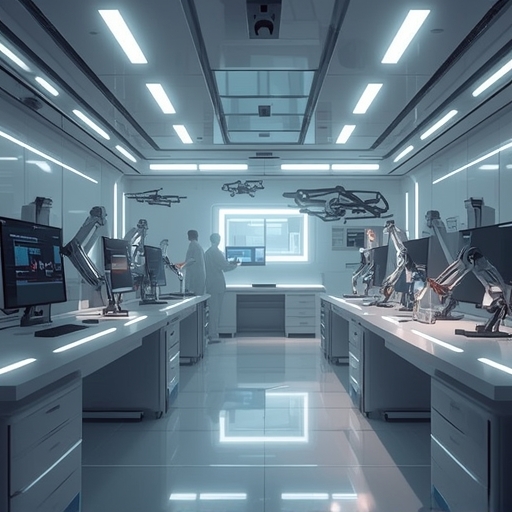
OpenAI is embarking on a profound and ambitious resurgence in the domain of robotics, signaling not merely a return but a strategic reinvention of its approach to the synergy between artificial intelligence and physical automation. Over the past year, the organization has amplified its robotics initiatives with remarkable speed and focus, expanding its research infrastructure and establishing a second state-of-the-art laboratory devoted exclusively to intelligent robotic systems. This expansion is more than a logistical growth strategy — it reflects OpenAI’s long-term vision of bridging the gap between cognitive AI models and tangible, real-world applications that can interact seamlessly with complex environments.
This renewed emphasis demonstrates an evolving understanding within OpenAI that the future of artificial intelligence will not be confined to virtual or language-based systems alone but will increasingly extend into the realm of dexterous, adaptive machines capable of learning, perceiving, and acting autonomously. By integrating cutting-edge deep learning frameworks with advanced robotics engineering, OpenAI aims to accelerate innovation at the intersection where digital cognition meets mechanical precision.
The establishment of multiple laboratories dedicated to robotics research underscores the scale and seriousness of this endeavor. Each facility contributes to a collaborative ecosystem where engineers, scientists, and designers work collectively to refine both theoretical models of intelligence and their practical robotic embodiments. The implications of this strategic expansion reach far beyond the confines of traditional AI research — they point toward a transformative horizon where artificial intelligence begins to shape industries such as manufacturing, healthcare, logistics, and even household automation.
As OpenAI strengthens its robotics division, the company is positioning itself at the forefront of a technological renaissance that unites intelligence and motion. The current phase of development suggests that OpenAI’s long-term goals involve creating systems that not only process information at extraordinary speeds but also engage physically with the world in ways that mirror human adaptability and problem-solving. The convergence of software intelligence and hardware embodiment is poised to unlock an entirely new era of intelligent machines that collaborate with humans, perform complex tasks, and extend the reach of technology into every aspect of modern life.
Ultimately, OpenAI’s re-entry into robotics signifies more than a research initiative — it represents a visionary attempt to redefine how artificial intelligence will manifest in the physical world. Through this renewed momentum, the company is charting the course for the next generation of robotics innovation, one that harmonizes data-driven intelligence, intricate motion control, and autonomous decision-making into a unified technological frontier. The dawn of intelligent robotics is no longer a distant concept; it is unfolding now, driven by OpenAI’s persistent pursuit of merging creativity, computation, and capability into a future that reimagines what machines — and humanity — can achieve together.
Sourse: https://www.businessinsider.com/open-ai-robotics-lab-humanoid-robots-2026-1