Journey into the vivid and transformative world of late nineteenth‑century America, when the nation’s economic heartbeat was profoundly shaped by its approach to trade and taxation. The 1890s marked an era when tariff policies were not merely technical discussions confined to congressional halls or financial journals — they were moral, social, and political battlegrounds that touched the life of every citizen. These duties on imported goods influenced the cost of clothing worn by ordinary families, the machinery that kept factories humming, and even the wages that defined livelihoods in newly growing towns.
Across the industrial landscape, tariffs were both celebrated and contested. For some, they symbolized patriotic protection — a sturdy wall safeguarding domestic industries and ensuring that American laborers would not be undercut by cheap foreign competition. For others, these same policies represented isolationism, driving up prices for consumers, stifling innovation, and deepening divides between the nation’s agricultural heartland and its manufacturing centers.
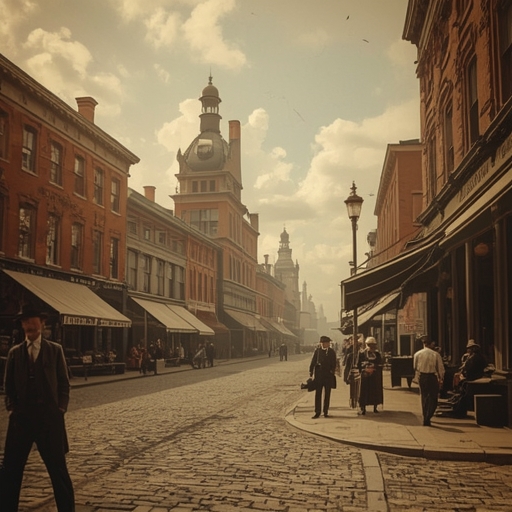
On urban streets lined with gas lamps and bustling with horse‑drawn carriages, one could feel the pulse of economic tension. Factory owners praised higher tariffs as the lifeblood of their enterprises, while farmers and merchants lamented the rising cost of everyday necessities. In parlors and newspapers alike, the debate raged: should America look inward to strengthen its own, or outward to embrace the wider currents of an increasingly global economy?
The effects went well beyond ledgers and led to changes in the way entire communities functioned. Markets shifted, small workshops gave way to sprawling industrial complexes, and regional identities took shape based on economic allegiance. Tariffs became more than numbers — they evolved into stories etched into the daily rhythm of life, influencing what people bought, where they worked, and how they viewed fairness and opportunity.
Though more than a century has passed, the echoes of those arguments remain familiar. In our modern era of globalized trade and digital interconnection, the balance between protection and participation, between local stability and international growth, continues to spark reflection and disagreement. The debates that once defined the 1890s still reverberate through today’s economic and political discourse, reminding us how intricately our prosperity, values, and sense of national identity are intertwined.
To revisit this moment in history is to rediscover a nation learning to define itself through commerce and policy. Every tariff enacted or repealed in that age was not just a financial adjustment — it was a cultural decision, shaping the ambitions of communities and the destiny of a rising economic power. The story of tariffs in the 1890s is, ultimately, a story of transformation: how a single set of economic instruments could influence factories, households, and the very notion of what it meant to live and thrive in America.
Sourse: https://www.businessinsider.com/vintage-photos-president-mckinley-tariffs-economy-2025-2