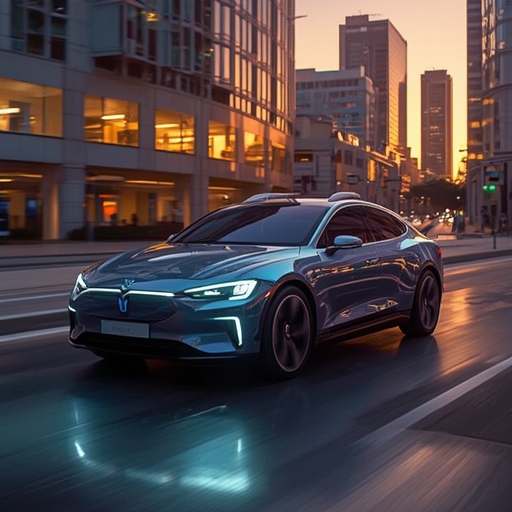
In a transformative milestone for the automotive and technology industries alike, Tesla has officially launched fully unsupervised robotaxi rides in Austin, Texas—a moment that signifies not merely a technical upgrade but a fundamental evolution in the relationship between humans, machines, and urban mobility. This development represents a bold step into the future of autonomous transportation, one that pushes the boundaries of artificial intelligence and challenges long-held assumptions about what vehicles are capable of achieving independently.
Unlike previous iterations of self-driving systems that required human monitoring or safety drivers ready to intervene, these new Tesla robotaxis operate entirely without human oversight. They navigate city streets, recognize complex patterns in real time, and make instantaneous decisions to ensure both passenger safety and operational efficiency. This degree of autonomy marks a quantum leap in AI integration, reflecting years of continuous refinement in Tesla’s neural network and sensor technologies.
Austin, known for its vibrant innovation culture and forward-thinking infrastructure, serves as the ideal launch ground for this historic initiative. The city’s dynamic energy ecosystem and rapidly growing tech community create fertile terrain for testing and scaling such advanced systems. Beyond the regional impact, however, Tesla’s achievement carries global implications—it signifies a tangible step toward a future where vehicles act as fully independent agents within the transportation network.
From a broader perspective, the introduction of unsupervised robotaxi rides highlights the accelerating maturation of machine learning algorithms capable of interpreting nuanced driving contexts previously reserved for human intuition. By enabling cars to learn continuously from environmental data, Tesla’s approach not only enhances safety but also reduces human error—one of the leading causes of traffic incidents worldwide. In doing so, it ushers in a paradigm in which driving becomes a seamless, intelligent, and largely invisible activity.
Critically, this advancement also stimulates a wider conversation about urban planning, energy efficiency, and the evolution of public trust in AI systems. Questions surrounding regulation, ethical accountability, and the socio-economic effects of large-scale automation will inevitably shape the next phase of this transformation. Yet, Tesla’s progress demonstrates that these challenges are not insurmountable; rather, they are signposts on the road toward a more connected, sustainable, and data-driven transport infrastructure.
The arrival of Tesla’s unsupervised robotaxi in everyday traffic symbolizes more than just an engineering triumph—it is a harbinger of the world’s transition toward autonomous ecosystems that learn, adapt, and operate with minimal human input. It invites society to reimagine what mobility means when the act of driving itself becomes an optional, perhaps even nostalgic, human endeavor. As AI-driven innovation accelerates, the streets of Austin stand as a living laboratory for the next era of transportation—one where technology and autonomy converge to redefine movement as we know it.
Sourse: https://www.theverge.com/transportation/866165/tesla-robotaxi-unsupervised-austin-texas-safety-monitor