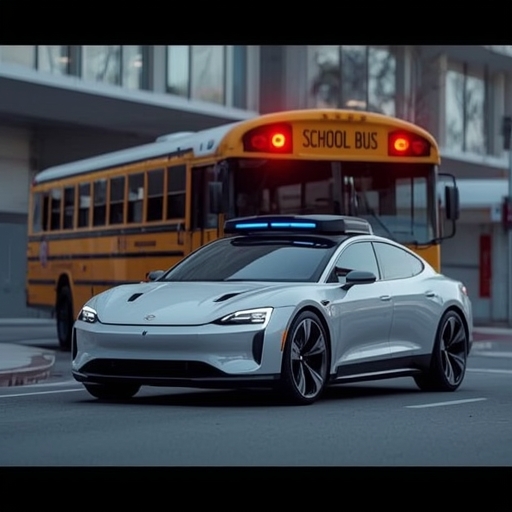
Waymo has become the focus of intensified federal scrutiny as both the National Transportation Safety Board (NTSB) and the National Highway Traffic Safety Administration (NHTSA) launch parallel investigations into troubling reports involving the company’s autonomous vehicles. These reports suggest that driverless Waymo cars may have illegally driven past stationary school buses that were stopped with their safety lights flashing—a situation that poses serious ethical, legal, and safety questions about the deployment of automated driving systems on public roads.
This dual-agency investigation signifies far more than a routine regulatory check. It underscores a pivotal moment in the ongoing evolution of autonomous vehicle technology, pressing policymakers, engineers, and the general public to reflect on how innovation can advance responsibly without compromising human safety. The NTSB’s involvement, in particular, elevates the matter to a higher level of seriousness, as its mandate centers specifically on determining causes of transportation incidents and recommending safety improvements across all modes of travel.
The NHTSA, already leading an inquiry into self-driving vehicle compliance, now finds an important ally in the NTSB—an organization known for its independent and data-driven approach to complex transportation issues. Together, their coordinated actions reflect a growing recognition that emerging technologies must operate within strict safety frameworks. Even the most advanced artificial intelligence and sensor technologies remain fallible, especially in nuanced real-world conditions where the unpredictable behavior of pedestrians, cyclists, and schoolchildren can challenge automated systems.
In the broader context, the Waymo investigation serves as a reminder that innovation in mobility is inseparable from accountability. For every technological leap toward a future of driverless convenience, regulators, manufacturers, and engineers share a collective duty to ensure that human lives remain the foremost priority. The sight of a stopped school bus, universally understood as a symbol of child safety, should never become a point of risk due to software or sensor failure.
As the federal probes move forward, the outcomes may set precedents that influence how autonomous vehicles are tested, certified, and monitored across the United States. These developments could shape forthcoming safety standards, liability frameworks, and ethical guidelines for artificial intelligence applications in transportation. Ultimately, this case is not merely about a single incident or company—it represents a defining moment for the relationship between innovation, regulation, and public trust on the road to an autonomous future.
Sourse: https://techcrunch.com/2026/01/23/waymo-probed-by-national-transportation-safety-board-over-illegal-school-bus-behavior/