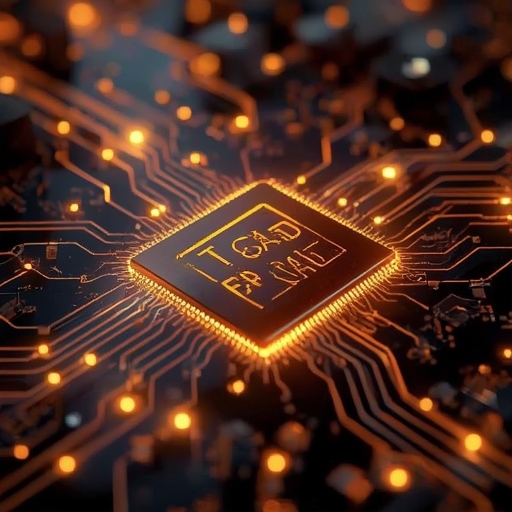
Samsung is rapidly approaching an essential turning point in the competitive arena of advanced semiconductor development, as the company edges closer to securing Nvidia’s formal approval for its next-generation HBM4 (High Bandwidth Memory 4) chips — a category of ultra-fast memory crucial for powering artificial intelligence (AI) systems and large-scale computing infrastructures. This progress does not merely represent a routine technological step, but rather, a pivotal achievement that underscores Samsung’s strategic commitment to regaining balance and competitiveness against SK Hynix, the current industry leader in high-performance AI memory solutions.
The approval from Nvidia, one of the most influential players in the global AI hardware ecosystem, carries significant implications. For Samsung, receiving certification for the HBM4 chips would validate the company’s engineering excellence and quality standards, confirming that its technology meets the exacting demands of Nvidia’s next-generation GPU architectures. Such alignment would grant Samsung renewed relevance within a rapidly expanding market where memory speed, efficiency, and reliability define the boundaries of possible AI performance.
HBM4 technology itself represents the forefront of semiconductor innovation — delivering massive bandwidth increases while minimizing power consumption and physical footprint. These chips are specifically designed to accelerate AI computations, enabling faster data exchange between processors and memory modules, a factor that is critical for training large-scale neural networks and executing resource-intensive machine learning tasks. By obtaining Nvidia’s endorsement, Samsung would strengthen its position as an essential contributor to the global AI infrastructure, asserting its technological prowess and readiness to compete directly with SK Hynix in shaping the next wave of high-efficiency computing.
In a broader sense, this milestone encapsulates the intensifying race among major chip manufacturers to dominate the future of computational performance. As AI applications proliferate—from autonomous vehicles and intuitive robotics to cloud data centers and generative models—the demand for ever-faster, power-efficient memory solutions continues to surge. Samsung’s progress toward HBM4 approval highlights both the urgency and the opportunity inherent in this competitive landscape, revealing how innovation in hardware design is reshaping the technological foundations of AI itself.
Ultimately, Nvidia’s forthcoming decision will not only influence Samsung’s immediate market trajectory but could also redefine standards governing the next era of memory performance and efficiency. Through perseverance and technological precision, Samsung is positioning itself at the forefront of a global transformation, where every incremental advancement in semiconductor capability contributes to expanding the limits of computational intelligence. This moment, therefore, stands as far more than a procedural checkpoint—it represents a meaningful stride toward the future of AI-driven technology and the continuing evolution of high-bandwidth memory architecture.
Sourse: https://www.bloomberg.com/news/articles/2026-01-26/samsung-nears-nvidia-s-approval-for-key-hbm4-ai-memory-chips