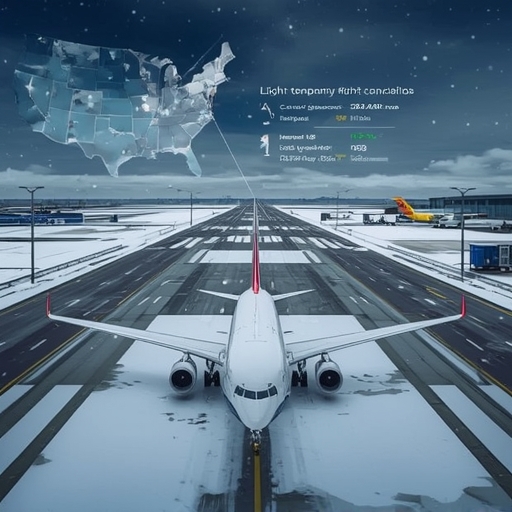
As a sprawling and ferocious winter storm cascades across the United States, the nation’s aviation network has experienced an almost unprecedented level of disruption. In total, approximately nineteen thousand flights have been canceled nationwide — a number so vast that it marks the gravest and most chaotic weekend for air travel since the height of the global pandemic. Major airports from coast to coast have found themselves blanketed under relentless snowfall, their runways turning into treacherous expanses of ice and slush. The visual of motionless aircraft lined up under heavy skies has become the defining image of this remarkable meteorological event.
According to updated figures from FlightAware, the situation reached its peak on Sunday, when more than fifteen thousand individual flights were grounded within a twenty-four-hour span. This astronomical figure not only highlights the breadth of the operational crisis but also reveals the fragility of interconnected logistics systems when confronted with severe and widespread weather conditions. Airline crews, maintenance teams, and logistical operators have struggled to maintain any semblance of normalcy as freezing rain, wind gusts, and whiteout conditions have disrupted even the most meticulously arranged schedules.
Beyond the immediate inconvenience to travelers, this storm has illuminated a deeper and more systemic issue within modern transportation infrastructure. Inclement weather, worsened by changing climatic patterns and regional temperature volatility, continues to expose vulnerabilities that ripple far beyond individual flight cancellations. Supply chains depending on consistent cargo movement have stalled, regional tourism faces sudden paralysis, and business operations reliant on in-person engagements have been forced to pivot yet again to remote alternatives. The aviation sector — already burdened by staffing shortages, evolving safety protocols, and fluctuating consumer demand — has now been compelled to confront another force majeure that tests both resilience and adaptability.
For passengers, the experience has been particularly jarring. Many who had anticipated smooth travel for holidays, professional trips, or long-awaited reunions suddenly found themselves stranded in terminals transformed into temporary shelters. Airlines have scrambled to issue refunds, rebookings, and vouchers, while airport administrators have urged travelers to check real-time updates before departing for terminals already choked with delays. Local authorities, mindful of power outages and road closures, have coordinated emergency responses to ensure safety, offering heated shelters and counseling stranded families through community relief resources.
This event, monumental in its geographic and operational scope, will inevitably serve as a case study for both aviation experts and meteorologists. It emphasizes the necessity of proactive risk mitigation — through enhanced forecasting accuracy, rapid-deployment deicing technologies, contingency flight scheduling, and robust communication strategies — that can minimize future disruptions of similar scale. At the same time, it reinforces the reality that human mobility, no matter how advanced, remains intimately tied to the forces of nature. As the country thaws from this powerful winter episode, analysts and policymakers alike are expected to reexamine the lessons it imposed: the importance of preparedness, infrastructure modernization, and above all, the humility required to navigate an unpredictable atmosphere that continues to shape our collective journey through the modern sky.
Sourse: https://www.businessinsider.com/winter-storm-flight-cancellations-airports-map-fern-snow-airlines-dallas-2026-1