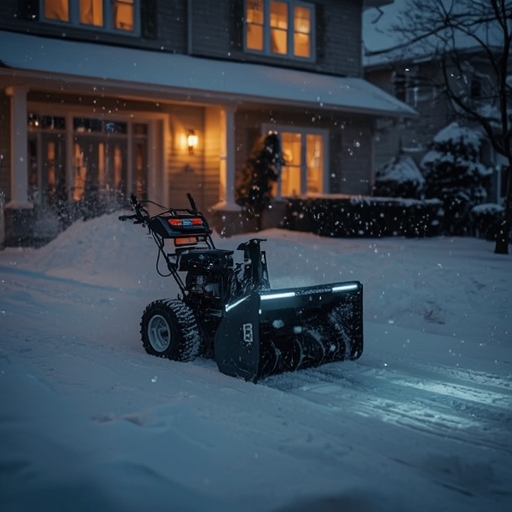
As technology continues to evolve at a breathtaking pace, automation is steadily reshaping even the most mundane aspects of daily life, extending far beyond the boundaries of industrial production lines or smart appliances. A recent viral story strikingly illustrates this shift: one homeowner faced a raging winter blizzard not with a shovel or snowplow, but with innovation. Instead of braving freezing temperatures and biting winds, he remained comfortably indoors while his $4,999 autonomous snow blower methodically cleared his driveway.
This scene encapsulates the transformative potential of intelligent technology. For generations, winter maintenance meant physical strain—hours of shoveling, frostbitten hands, and laborious effort. Now, with the emergence of advanced home robotics, the notion of a machine braving the elements while its owner observes from the warmth and safety of home highlights a profound change in how humans interact with their environment. It also suggests a redefinition of what household work can be: not a series of manual tasks, but a network of systems capable of executing them autonomously and efficiently.
The device’s price point—$4,999—places it squarely within the early-adopter range, appealing to a growing demographic that values convenience, precision, and technological prestige. This cost might seem steep compared to a simple snow shovel, yet when viewed as part of a broader trend of household automation—similar to robotic vacuum cleaners, lawn-mowing bots, and smart thermostats—it becomes emblematic of how innovation gradually shifts from luxury to necessity.
The image of a single machine navigating a frozen driveway on its own speaks to more than clever engineering; it embodies the expanding boundaries of comfort and control in an automated age. The viral popularity of the story shows how deeply the concept resonates with a society simultaneously fascinated by technology’s promise and eager to simplify life’s repetitive burdens.
Beyond the novelty lies a larger question: as robotics integrate further into domestic spaces, how will our daily routines, physical engagement, and even our perception of chores evolve? Perhaps soon, the sound of a motorized blower operating outside won’t signify labor but liberation—a sign that human time and energy can be devoted elsewhere while intelligent systems quietly manage the rest.
In this way, a snow blower becomes more than a seasonal tool; it becomes a symbol of the broader movement toward smart living and the increasingly seamless partnership between humans and the machines that serve them.
Sourse: https://www.businessinsider.com/winter-storm-robot-snow-blower-yarbo-driveway-tom-moloughney-2026-1