Taiwan is embarking on a bold and transformative defense strategy designed to redefine the very essence of its ground forces. The nation’s military is methodically integrating artificial intelligence, next-generation armored vehicles, and autonomous aerial systems into its operational framework. This modernization initiative represents not only a technological advancement but also a strategic evolution toward a fully networked, data-driven defense ecosystem capable of swift adaptation in the face of emerging threats.
Across command structures, AI-driven systems are enhancing real-time situational awareness, enabling commanders to interpret battlefield data with unprecedented speed and precision. This digital intelligence augments decision-making, significantly reducing human error by filtering vast streams of information through advanced algorithms that can anticipate tactical opportunities and react instantly to evolving battlefield conditions. For instance, AI-enabled targeting and logistics software are being synchronized to coordinate troop movements and resource deployment with mathematical accuracy—a feat impossible in traditional manual planning processes.
Complementing these innovations are fleets of autonomous drones, which serve as both reconnaissance and combat support assets. These unmanned systems are set to extend the army’s operational reach far beyond conventional lines, mapping terrain, locating potential adversarial positions, and even delivering small-scale payloads. By integrating drones directly into AI-commanded networks, Taiwan’s forces are building a layered defense system capable of continuous surveillance, rapid countermeasures, and coordinated strikes. Each drone, operating in a semi-autonomous swarm configuration, functions as both an independent intelligence node and a cooperative unit within a broader digital battlefield.
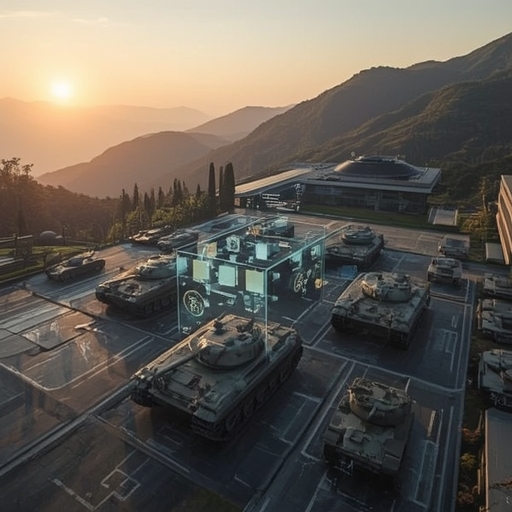
Equally transformative is the inclusion of specialized Abrams tanks configured for regional conditions and upgraded with digital interoperability features. These armored units are envisioned not merely as powerful machines of warfare, but as data-connected platforms capable of communicating directly with command hubs, airborne reconnaissance units, and support vehicles in real time. The fusion of physical strength and digital proficiency is redefining the tank’s role from an isolated combat asset to a key participant in a synchronized, information-centric defense network.
Collectively, these developments illustrate Taiwan’s forward-thinking commitment to military innovation. The modernization of its ground forces transcends aesthetic upgrades or incremental improvements—it represents a foundational shift toward intelligence-driven warfare, where every unit, sensor, and system operates as part of a cohesive technological ecosystem. The integration of AI, drones, and advanced armor embodies a future in which national defense relies on adaptability, automation, and seamless coordination between human expertise and machine precision.
Ultimately, Taiwan’s transformation underscores a decisive embrace of the future battlefield: one defined not by numbers or sheer firepower, but by the strategic mastery of information, speed, and intelligent systems. This evolution marks a pivotal chapter in the country’s defense strategy—a deliberate investment in resilience, innovation, and preparedness for the complex challenges of modern warfare.
Sourse: https://www.businessinsider.com/taiwans-ground-forces-restructure-makes-using-new-weapons-easier-2026-1