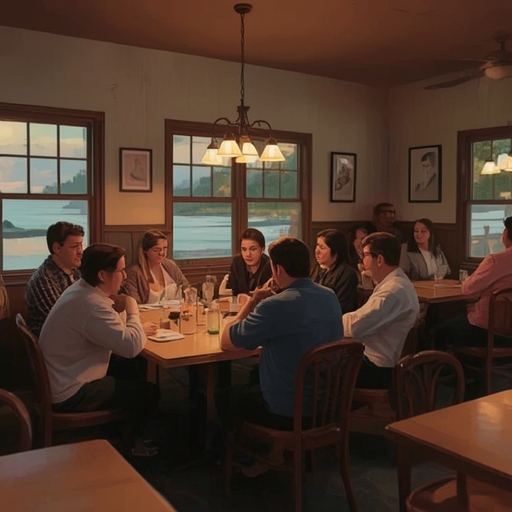
Across Portland, Maine, the quiet hum of community life has been pierced by a growing tension that extends far beyond politics or policy debates. Inside one small but vibrant restaurant, the owner has made a sobering decision — to prepare his staff for the possibility of immigration enforcement raids. What might sound like an abstract concern in national headlines has become a deeply personal and practical reality for a local business that simply wants to serve food, foster connection, and offer a sense of belonging.
This owner’s proactive approach—training employees on how to respond calmly and safely in the event of an ICE visit—is not born of ideology but of necessity. The presence of immigration authorities in the region has introduced a pervasive climate of unease, particularly among workers whose lives straddle the fragile intersection of livelihood and legality. Behind each training, there is an unspoken acknowledgment of fear: the fear that a single unexpected moment could unravel families, livelihoods, and the trust that binds coworkers together.
For customers, this story may seem distant or uncomfortable, but for those working the kitchen line, taking orders, and serving tables, it is an everyday undercurrent of anxiety. The restaurant, once a place defined by shared meals and the laughter of regular patrons, now doubles as a refuge—a space where staff learn to protect each other while continuing to welcome the public with professionalism and warmth.
The situation unfolding here underscores a broader truth: immigration enforcement doesn’t just shape policy debates or political campaigns; it reaches into the beating heart of small-town businesses, rippling through communities that depend on mutual support. Local entrepreneurs, already balancing the complexities of staffing, supply chains, and customer care, now grapple with an additional layer of moral and emotional responsibility—how to safeguard the people who make their establishments thrive.
As Portland’s restaurants and small enterprises navigate this climate of uncertainty, one restaurateur’s actions embody both caution and compassion. By addressing the issue directly, rather than ignoring it, he is sending a message—to his employees, his community, and perhaps the nation at large—that humanity must remain central in times of fear. His story invites us all to consider what solidarity looks like in the face of policy and what it truly means to preserve dignity in the spaces where we live and work.
Sourse: https://www.businessinsider.com/portland-maine-restaurant-ice-raid-arrest-training-2026-1