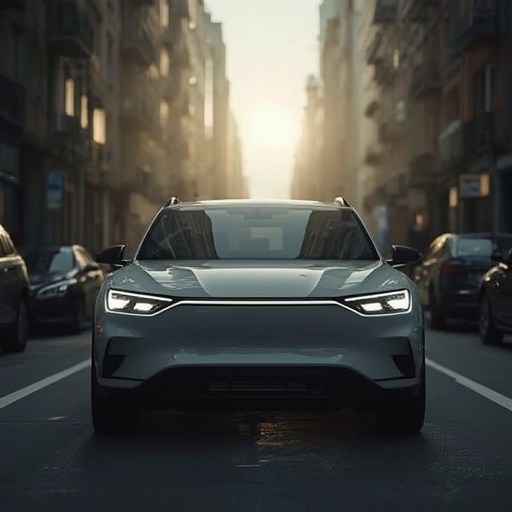
In a recent occurrence that unfolded on a narrow residential street in Los Angeles, a Waymo vehicle—although equipped with cutting‑edge autonomous technology—was under the manual control of a company employee when it collided with several parked cars. This event serves as a vivid and cautionary reminder that even in an era increasingly defined by automation and artificial intelligence, the necessity of human judgement and reaction remains fundamental to safety.\n\nThe collision highlights the complex interplay between technological advancement and human responsibility. While the autonomous capabilities of vehicles such as those developed by Waymo continue to expand rapidly, ensuring remarkable precision in navigation and situational awareness, the human factor continues to play an irreplaceable role. In this case, the driver’s presence and actions became the focal point of attention, illustrating that human control is still a decisive element in the safe operation of vehicles, particularly in environments requiring delicate maneuvering, such as narrow city streets or densely populated neighborhoods.\n\nThis incident also encourages a broader reflection on the evolving relationship between innovation and accountability. As self‑driving systems become more sophisticated, the boundary between automated assistance and direct human intervention becomes blurred. Incidents like this compel policymakers, engineers, and the driving public alike to reassess how responsibility and oversight are allocated in hybrid systems where human and machine performance must harmonize seamlessly.\n\nBeyond its immediate implications, the Los Angeles crash underscores a persistent truth about modern mobility: technology, as advanced as it may be, functions most effectively under mindful human supervision. The trust the public places in autonomous systems relies not only on the algorithms and sensors that guide them but also on the integrity, training, and alertness of the humans who monitor their operation. Events like this urge continuous progress toward improving both technological safeguards and human readiness.\n\nUltimately, the Waymo incident represents more than an isolated error; it symbolizes a moment of convergence between innovation and human limitation. It reminds us that the evolution of transportation toward full automation must proceed with humility, recognizing that true safety arises from the careful collaboration between machines’ precision and human discernment. As the automotive industry continues its relentless pursuit of autonomy, experiences such as this will remain vital signposts, reaffirming that people and technology must advance together rather than apart.
Sourse: https://www.businessinsider.com/waymo-human-driver-crash-parked-cars-los-angeles-2026-1