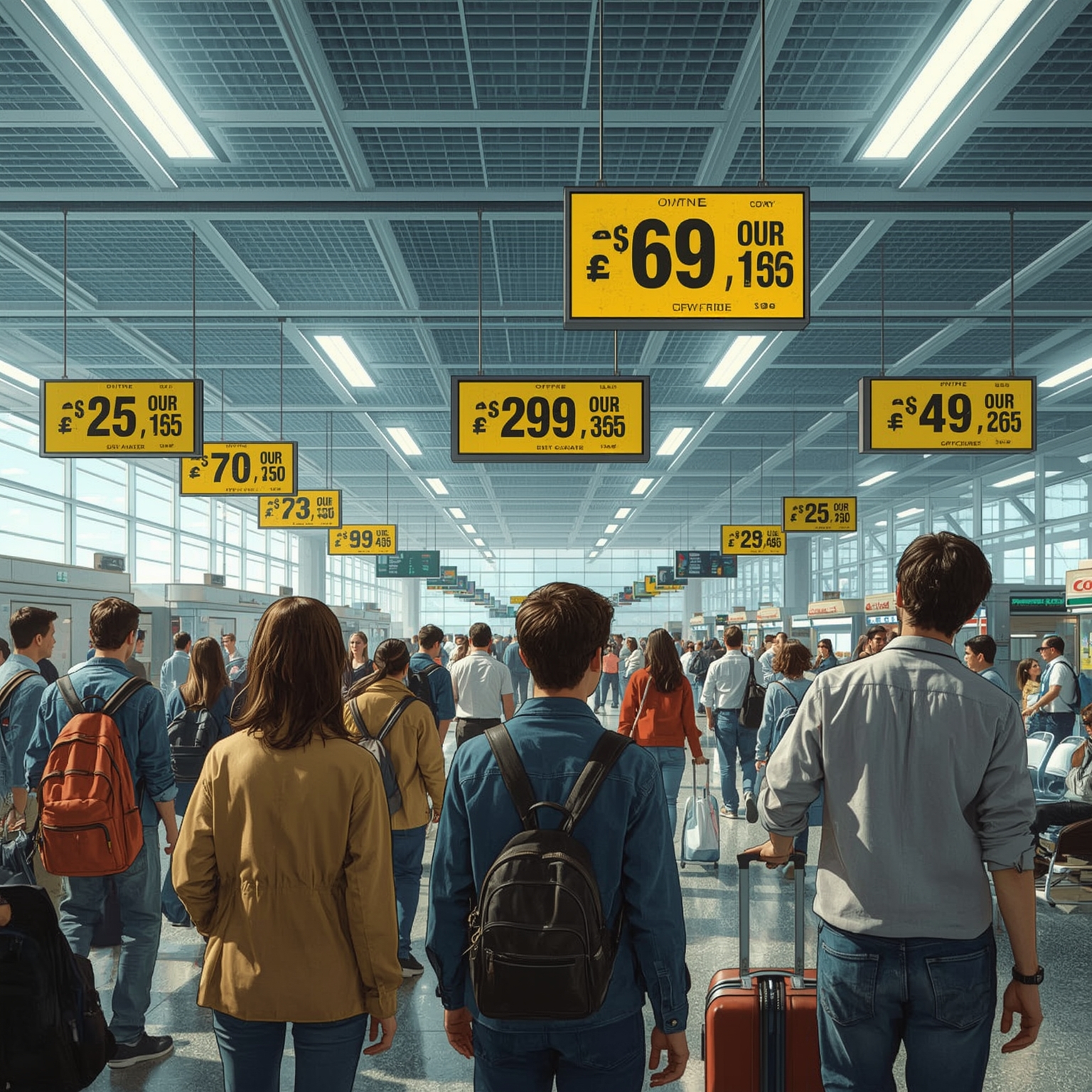
Airports have long depended on travelers not merely as passengers moving from one destination to another, but also as consumers who spend substantial amounts of money once they pass through security and enter the terminal. In fact, by 2024, airports across the United States collectively earned well over a billion dollars in revenue that came directly from customer purchases inside their facilities. These earnings were generated from the sale of surprisingly costly everyday products—items that in ordinary circumstances might be inexpensive. Examples include bottled water priced at around six dollars, beers that astonishingly reach twenty‑seven dollars each, and even something as mundane as a bag of Chex Mix selling for ten dollars. Taken together, these figures illustrate how essential concession spending has become to the airport business model.
What stands out even more is that airports are not trending toward affordability; rather, they are becoming progressively more expensive with each passing year. In the earlier part of this century, particularly throughout the early 2000s, certain airports made an attempt to implement what was often called “street pricing,” a policy that strove to keep food, beverages, and retail goods inside the terminal roughly equal to prices outside of it. Such efforts were designed to prevent passengers from feeling exploited while traveling. Yet in today’s environment, this consumer‑friendly philosophy has largely been abandoned. Many airports have chosen either to raise the cap on in‑terminal pricing or to discard those restrictions altogether, effectively removing any boundaries on how much vendors can charge.
A major reason prices remain so elevated is the lack of genuine competition within the terminal environment. Once passengers have crossed security checkpoints, they find themselves in a contained commercial ecosystem with very limited choices. In practice, that means much of the dining and retail space is not divided among countless small local businesses, but instead controlled by only a handful of large multinational concessionaires that hold significant sway over the marketplace. With just a few massive companies operating the majority of food stalls, bars, and retail outlets, the normal pressures of competition that would typically push prices downward are virtually absent.
These dynamics naturally give rise to an unsettling question: how exactly did airport pricing escalate to such extraordinary levels, and why are some facilities now allowing vendors to push prices even higher? The answers lie in the interplay between airport revenue strategies, concessionaire dominance, and the captive nature of the consumer base. Passengers, unable to leave and re‑enter security with ease, are effectively locked into a closed economy where their options are restricted—and operators fully understand this. Thus, the rise of such steep prices is less about the intrinsic costs of snacks or drinks and more about structural limitations, economic dependency, and profit‑maximizing strategies adopted by airports themselves.
Sourse: https://www.businessinsider.com/why-are-airports-so-expensive