Tesla is entering one of the most consequential phases in its corporate evolution, redefining not only its core business but also reshaping the broader technological landscape. The company’s recent announcement of a $2 billion investment in xAI—a bold initiative aimed at advancing artificial intelligence beyond the laboratory and into the tangible world—marks the beginning of a profound transformation. No longer will Tesla be solely known for its luxury electric vehicles; instead, it is now positioning itself as a pioneer at the intersection of intelligent systems and physical automation.
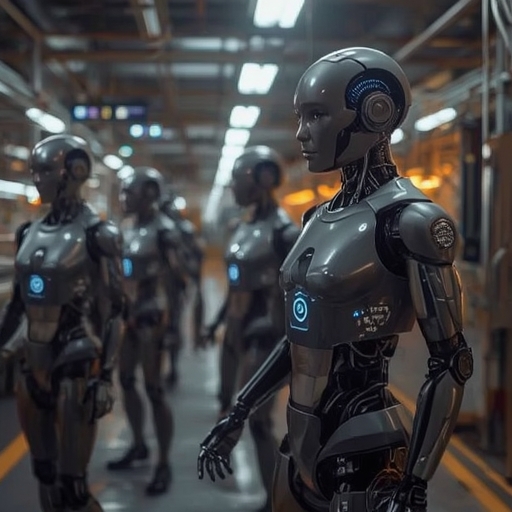
This strategic redirection goes far beyond the retirement of the Model S and Model X lines, which once symbolized the company’s dominance in high-performance EVs. In their stead emerges an even more ambitious pursuit: the expansion of AI-driven robotics, embodied most visibly through the Optimus humanoid robot. Unlike traditional industrial machines, Optimus represents Tesla’s vision for an adaptable, autonomous, and scalable workforce—one capable of carrying out complex physical tasks with cognitive precision and situational awareness. Its design, rooted in Tesla’s years of experience with machine learning, motion planning, and sophisticated supply chain integration, serves as a natural extension of the technologies that once revolutionized electric mobility.
By concentrating resources on Optimus and its supporting AI infrastructure, Tesla is effectively shifting from being an automaker to becoming what CEO Elon Musk calls a ‘physical AI’ enterprise—a company that merges software intelligence with real-world mechanical embodiment. This is not a peripheral experiment or a publicity endeavor; it’s a large-scale commitment reminiscent of Tesla’s earliest ventures into the EV market, when the idea of widespread electrified transport seemed implausible. Now, the company applies the same disruptive energy to a new frontier where robots will not only coexist alongside humans but also enhance productivity, safety, and creativity across industries.
The ripple effects of this evolution extend well beyond the confines of Tesla’s factories. Such a monumental investment in artificial intelligence has the potential to redefine labor economics, industrial design, and the global perception of automation. As AI algorithms grow increasingly adaptive, these humanoid systems could one day perform a broad spectrum of roles—from logistics to manufacturing to consumer services—complementing human workers in ways that were previously unimaginable. In this light, Tesla’s initiative is not just about creating machines; it’s about cultivating a symbiotic relationship between human innovation and artificial cognition.
Underpinning all of this is a clear philosophical throughline that has guided Tesla since its inception: the belief that technology must continually evolve to serve civilization’s long-term advancement. The pivot from vehicles to robots is therefore less a departure than an expansion—a deliberate step toward fulfilling a more universal mission. Having mastered the electrification of transport, Tesla now seeks to electrify the very concept of work itself, driving humanity closer to a future in which intelligence, whether organic or artificial, operates harmoniously within the physical world. This is the dawn of the era Tesla calls ‘physical AI,’ and it may prove to be as revolutionary for industry as the automobile once was for travel.
Sourse: https://www.businessinsider.com/tesla-q4-earnings-call-summary-robotaxi-optimus-ai5-chips-2026-1