Artificial Intelligence is rapidly emerging as one of the most transformative forces in modern education, reshaping how students absorb information, how teachers instruct, and how schools operate at large. Geoffrey Hinton, often celebrated as the ‘Godfather of AI’ for his pioneering contributions to deep learning and neural networks, recently spotlighted Alpha School as an exemplary model of this new educational frontier. His acknowledgment underscores a growing global consensus that when harnessed responsibly, AI can serve as a catalyst for meaningful educational reform.
In Hinton’s view, Alpha School stands as more than just a private institution incorporating technology into the classroom — it represents an evolution in pedagogical thinking. Through the strategic application of AI, the school demonstrates that data-driven insights, adaptive teaching systems, and intelligent tutoring tools can personalize learning experiences to an unprecedented degree. Each student benefits from individualized pacing, feedback, and enrichment opportunities designed to meet unique strengths, weaknesses, and interests. Rather than replacing teachers, AI acts as an empowering partner that allows them to focus on creativity, mentorship, and emotional engagement — areas where human judgment and empathy remain irreplaceable.
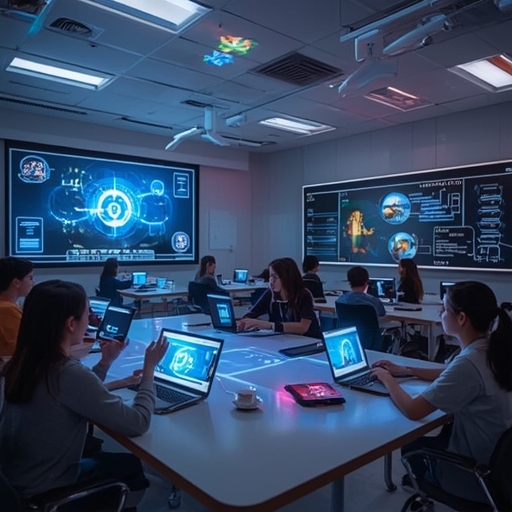
The practical implications of this integration are profound. Imagine classrooms where advanced algorithms track learning progress in real time, suggesting tailored exercises for students who need additional support while simultaneously challenging those who are ready to move ahead. Teachers receive analytical dashboards highlighting performance patterns, enabling them to make evidence-based decisions with greater accuracy and confidence. Administrative tasks such as grading, attendance, and curriculum optimization become more efficient, freeing educators to invest more energy in fostering intellectual curiosity and critical thinking.
Beyond the mechanics of instruction, the AI-enhanced environment nurtures a mindset of discovery. Students exposed to intelligent learning systems acquire not only knowledge but also digital literacy — a crucial skill in the 21st century. They learn to interact productively with technology, question information sources, and apply computational logic to real-world problems. This balance between humanistic education and technological proficiency positions learners to thrive in an economy increasingly defined by innovation and automation.
Hinton’s praise of Alpha School signals a larger philosophical shift. Education is no longer confined to static textbooks or standardized curricula; it is evolving into a dynamic ecosystem shaped by continuous feedback and adaptive innovation. The ‘classroom of the future’ is not a distant concept — it is a living reality unfolding today in schools that embrace the synergy of human ingenuity and artificial intelligence. As more institutions follow this path, society moves closer to an era where technology becomes an ally in unlocking the full potential of every mind it touches.
In this light, the future of learning looks not mechanical but profoundly human — informed by AI’s precision, enriched by creativity, and guided by a renewed commitment to the individual student’s growth and curiosity.
Sourse: https://www.businessinsider.com/godfather-ai-geoffrey-hinton-alpha-school-education-use-case-2026-1