The convergence of human creativity and artificial intelligence has yielded many remarkable achievements, but it has also revealed the limits of algorithmic imagination. A newly released series set during the Revolutionary War, produced almost entirely by AI systems, exemplifies this paradox with extraordinary clarity. Although marketed as an innovative experiment in automated filmmaking, the project has instead ignited a broad public debate concerning the very essence of storytelling, authenticity, and artistic vision.
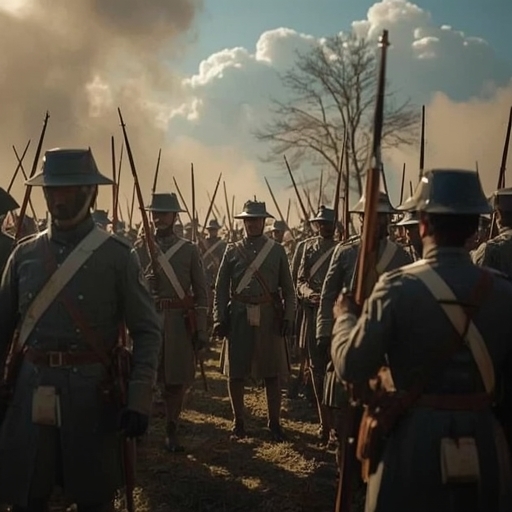
From a purely technical standpoint, the AI has succeeded in replicating cinematic conventions — coherent dialogue structures, historical costumes, and dramatic battlefield panoramas are all present. Yet despite these formal accuracies, viewers have overwhelmingly described the production as strangely hollow. Characters move and speak with mechanical precision but without emotional resonance, their interactions feeling more like simulations of empathy than genuine expressions of it. The resulting product is meticulously designed but curiously devoid of life, a mirror reflecting the gestures of art without conveying its soul.
This disquieting effect has prompted extensive discussion across the creative and technological communities. Filmmakers question whether an algorithm, no matter how advanced, can authentically reproduce the ineffable spark of human intuition — the spontaneous insight, irony, and emotional imperfection that define compelling cinema. Technologists counter that this very experiment represents progress: a necessary trial in the evolution toward synthetic creativity, where human direction and machine precision might one day coexist harmoniously.
The controversy underscores an essential tension in our age of digital invention. As automation extends into realms once considered inherently human — music, painting, and now film — society must confront the philosophical question of what constitutes true creation. Is art merely the recombination of data and patterns within established frameworks, or is it the unpredictable synthesis of emotion, experience, and intent? The Revolutionary War series, inadvertently, has become a cultural case study illustrating both the promise and peril of letting algorithms command the canvas.
Audiences remain divided. Some applaud the audacity of replacing human direction with code, arguing that such experiments challenge traditional notions of authorship and encourage new modes of expression. Others find the outcome a cautionary tale — a demonstration that while machines can imitate our creative structures, they struggle to replicate the subtle disorder and empathy from which meaningful storytelling arises.
Ultimately, the discussion surrounding this peculiar production transcends its immediate entertainment value. It compels us to rethink how technology should serve art: as an augmentative force that enriches human creativity, or as a self-sufficient creator that risks erasing the human element altogether. In either case, this AI-driven Revolutionary War drama has achieved something unintended yet profoundly significant — it has made us reflect on what it truly means to tell a story, to feel it, and to remain human in an age increasingly sculpted by intelligent machines.
Sourse: https://gizmodo.com/darren-aronofskys-new-ai-series-about-the-revolutionary-war-looks-like-dogshit-2000715754