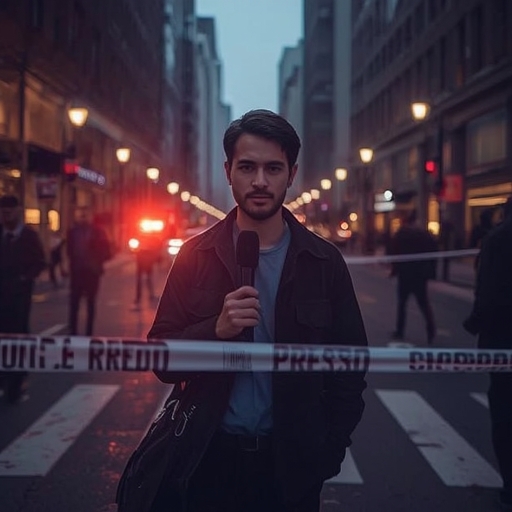
A former CNN anchor’s recent arrest in Los Angeles, following his on-the-ground coverage of a protest in Minnesota, has ignited profound discussions about the boundaries of press freedom and the role of journalists in an increasingly turbulent sociopolitical landscape. According to his legal representatives, the journalist was working strictly in his professional capacity, documenting the protest rather than participating in it. Despite this clarification, his detention underscores the growing tension that often arises where law enforcement duties intersect with journalistic responsibilities.
The demonstration in Minnesota, centered on immigration issues and held at a church that had become a focal point of public outcry, drew both activists and members of the media. The anchor, known for his previous national broadcasts and reputation for direct, field-based reporting, was present to cover the unfolding story. However, his arrest has brought to the forefront critical ethical, professional, and constitutional questions: at what point does the act of documenting civil unrest blur into alleged participation, and how do authorities distinguish journalists performing their occupational duties from actual demonstrators?
This incident is more than an isolated case—it resonates as part of a broader and persistent global phenomenon where reporters, photographers, and correspondents face growing obstacles while pursuing transparency and factual storytelling. The event compels both public institutions and private citizens to reexamine how societies define and protect freedom of the press amid rising polarization and public dissent. Historically, journalism has served as a cornerstone of democracy, ensuring that power, governance, and civic engagement remain visible and accountable. Yet, the vulnerability of journalists in volatile situations reminds us that such principles, though foundational, require continual reinforcement.
Beyond the immediate legal implications, the arrest also amplifies a philosophical debate on the delicate balance between public safety, governmental authority, and the essential function of the press. Should journalists bear the risk of arrest or harassment for merely exercising their duties? This dilemma has reignited conversations about establishing clearer legal protections and protocols to safeguard media personnel during public demonstrations. The profession already demands immense courage and endurance, and when those documenting events are treated as participants, the press’s credibility and the public’s right to information both suffer.
Ultimately, this episode stands as a vivid reminder that the freedom to report is inseparable from the public’s right to know. The anchor’s experience, while personally costly, symbolizes a larger struggle to preserve transparency in a time when both the news and those who deliver it are scrutinized more intensely than ever before. It highlights the pressing need to reaffirm society’s collective commitment to journalistic integrity and to defend the principle that truth, however inconvenient or controversial, remains a vital pillar of justice and democracy.
Sourse: https://www.businessinsider.com/don-lemon-arrested-after-reporting-on-ice-protest-lawyer-says-2026-1