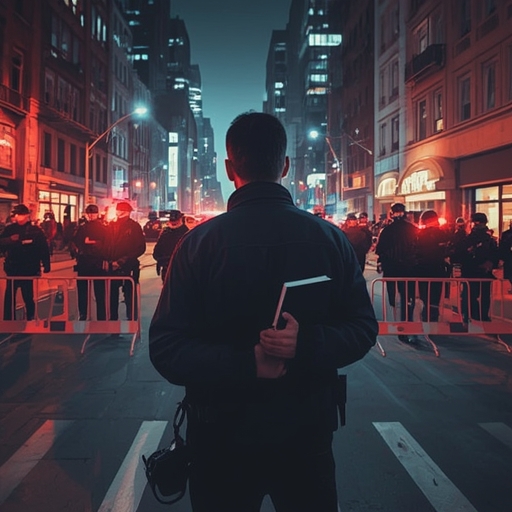
The recent arrest of a journalist during the coverage of an anti-government demonstration has once again placed a glaring spotlight on the precarious state of press freedom in contemporary society. What might seem like a single incident of police overreach carries far greater implications — it calls into question the ability of journalists to perform one of democracy’s most essential functions: witnessing events and conveying truths to the public without fear of retaliation or censorship.
Press freedom is not simply an abstract principle reserved for academic debate or political campaigns; it is the very framework that allows citizens to remain informed, governments to remain transparent, and societies to remain just. When a journalist is detained or intimidated merely for recording facts and amplifying voices from the streets, a chilling message reverberates through the wider media community: that truth-telling can carry personal risk, and that scrutiny of power might invite punishment rather than protection.
This particular arrest echoes a troubling global trend where reporters increasingly face detentions, legal harassment, or physical danger while covering civil demonstrations. The profession that relies on open inquiry and fearless observation finds itself constrained by surveillance, restrictive laws, and the volatility of public order enforcement. Events like this act as cautionary tales—not only to media professionals but also to ordinary citizens who depend on an unhindered press to make sense of complex realities. Without credible, independent reporting, misinformation fills the vacuum, distorting public discourse and weakening the accountability that sustains democratic governance.
Supporting press freedom therefore demands more than symbolic solidarity or reactive outrage. It requires a sustained public commitment to safeguard journalists’ rights, to hold authorities accountable for infringements, and to recognize that an attack on one reporter signals an attack on collective knowledge itself. The call to ‘protect the storytellers’ carries profound weight: every suppressed article, every silenced voice, and every confiscated camera represents a fracture in the democratic structure that binds free societies together.
In defending those who document the world in its rawest, most urgent moments—whether they stand on protest lines, in courtrooms, or in conflict zones—we affirm a shared belief that democracy thrives only when truth is visible, unfiltered, and unafraid. Journalism is not a crime; it is the lifeblood of accountability, an unwavering bridge between the governed and those who govern. Upholding that truth ensures that power remains answerable, history remains factual, and humanity retains its conscience.
Sourse: https://www.theverge.com/policy/870765/don-lemon-arrest-ice-protest