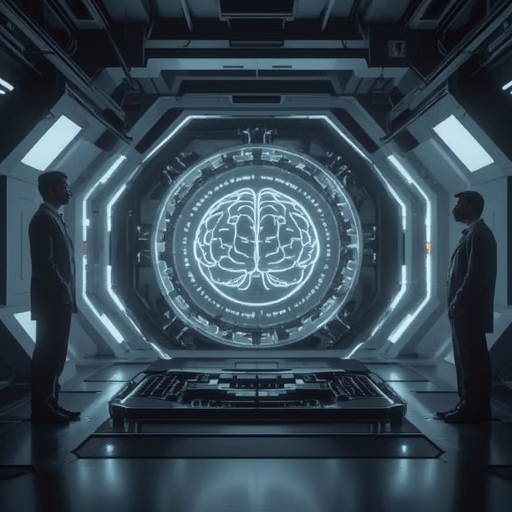
Across the ever-evolving landscape of Silicon Valley, a transformative movement is quietly reshaping the boundaries of modern technology. Instead of the usual focus on software, social media platforms, or app ecosystems, today’s conversation revolves around something far more tangible and ambitious—the creation of true robot brains. This initiative, encapsulated within the growing field of what experts call *Physical Intelligence*, represents a milestone in the fusion of artificial cognition and mechanical capability. It is not merely the next incremental advancement in robotics; it is the dawn of a new era where machines begin to understand, reason, and move with a sense of purpose grounded in the physical world rather than the confines of code alone.
At the heart of this revolution lies a startup that merges decades of rigorous scientific inquiry with the extraordinary momentum of contemporary innovation. Drawing deeply from foundational research in biomechanics, sensorimotor learning, and artificial intelligence, this team seeks to build robotic systems capable of perceiving and responding to their surroundings with unprecedented agility and insight. Their mission is not simply to program movement, but to emulate cognition—to endow machines with the kind of nuanced decision‑making that allows living organisms to adapt fluidly to changing environments. For instance, while traditional robots rely on pre-set instructions, a physically intelligent robot can adjust its actions on the fly, recalibrating balance, grip, or speed the same way humans instinctively adapt when walking on uneven ground.
The company’s foundation is rooted in the collaboration of visionary entrepreneurs and veteran researchers who have collectively spent years exploring how computation can emulate natural intelligence. Their expertise spans mechanical engineering, machine learning, neuroscience, and design, creating a team uniquely positioned to address one of the great frontiers of technology—the ability to endow machines with functional awareness. Supported by forward‑thinking investors who recognize that timing, talent, and technological readiness have finally converged, this endeavor exemplifies Silicon Valley’s enduring capacity to reinvent itself at the edge of science and imagination.
The social and industrial implications are profound. The development of physically intelligent machines could redefine how industries operate—from automated manufacturing and logistics to healthcare assistance and environmental exploration. Imagine surgical robots capable of anticipating subtle human movements, or autonomous drones that can adjust their coordination seamlessly in unpredictable weather conditions. These are not distant hypotheticals but near‑term possibilities emerging from the synthesis of decades of scientific effort with modern computational power. The ripple effects could extend far beyond the laboratory, setting new standards for how machines coexist and collaborate with human counterparts.
In essence, what is unfolding is the maturation of robotics into a discipline that mirrors life itself—where the mechanical meets the mindful, and intelligence is no longer confined to digital space but embedded in motion, structure, and touch. This pursuit of Physical Intelligence signals a moment of transformation for technology’s most creative region, a promise that the next chapter of innovation will not only think faster but also move, feel, and adapt with human‑like intuition.
The future emerging from Silicon Valley today feels remarkably alive. It hums not with static code, but with rhythm and awareness—machines learning to sense and to act, to interact rather than simply execute. The age of Physical Intelligence is no longer a conceptual dream; it is materializing as a tangible expression of humanity’s drive to understand itself through creation. As this energy coalesces, the vision of robots that truly think and move as living beings steps from the realm of speculation into the vivid light of possibility, ushering in a technological era defined by intelligence anchored in the physical world.
Sourse: https://techcrunch.com/2026/01/30/physical-intelligence-stripe-veteran-lachy-grooms-latest-bet-is-building-silicon-valleys-buzziest-robot-brains/