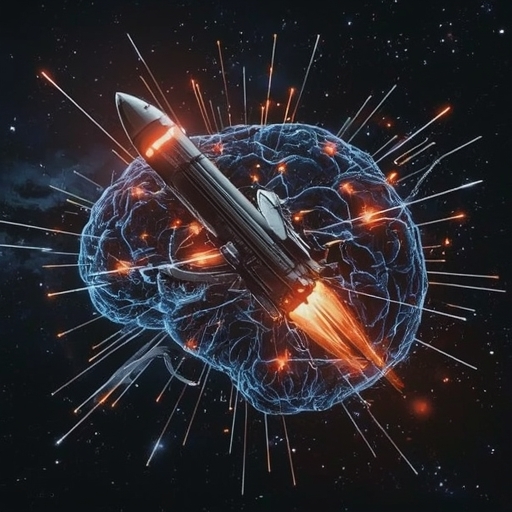
Humanity may be standing at the threshold of an extraordinary transformation, one that could forever redefine the boundaries of technological exploration and artificial intelligence. Envision, for a moment, the convergence of two of the most ambitious frontiers of modern innovation: the boundless realm of space technology and the ever-evolving universe of AI. This prospective mega-merger, uniting a pioneering space exploration enterprise with a leading force in artificial intelligence, carries the potential to reshape the very architecture of progress. It is not merely a business alliance; it represents an epochal leap toward the integration of human ingenuity and machine precision, crafting a partnership through which discovery and intelligence evolve in tandem.
Such a union could signify a decisive turning point in how humanity approaches exploration, innovation, and the pursuit of knowledge beyond Earth. By embedding the analytical prowess of AI into the daring and complex world of rocket science, engineers and researchers could transcend existing barriers—creating spacecraft that learn autonomously, adapt to unforeseen conditions, and execute missions with unprecedented efficiency and safety. The precision and adaptability of artificial intelligence, when combined with the ambition and resilience driving interplanetary travel, could yield innovations that stretch far beyond the confines of their respective industries.
In practical terms, this collaboration might give rise to rockets with dynamic navigation systems capable of making data-driven decisions in real time, predictive maintenance models that prevent costly failures before they occur, and AI copilots that enhance human oversight while managing the intricate variables of spaceflight. Imagine a future where each mission grows progressively smarter, where technology evolves not only through human invention but also through learning algorithms refining themselves across countless cosmic journeys.
Beyond the technical marvels, the deeper significance of this potential merger lies in its philosophical implications. It embodies a synthesis of two essential aspects of human progress: the drive to explore the unknown and the quest to increase the capacity of thought itself. As artificial intelligence becomes a true partner in exploration rather than merely a tool, the process of discovery transforms into a dialogue between human curiosity and machine perception. Together, these forces could open pathways to knowledge previously unreachable, bringing the universe into sharper focus.
Ultimately, this forward-looking merger symbolizes the dawn of a new era in integrated innovation—an age where intelligence and exploration are no longer separate endeavors but intertwined expressions of the same human aspiration. The implications for science, technology, and society are vast, promising a tomorrow where the dream of reaching the stars aligns seamlessly with the steady advance of artificial cognition. What once seemed the domain of imagination now stands within the grasp of purposeful creation, heralding a reality where rockets and artificial intelligence truly unite to expand the horizons of what is possible.
Sourse: https://www.wsj.com/tech/elon-musks-spacex-and-xai-are-planning-a-megamerger-of-rockets-and-ai-28e72fa9?mod=rss_Technology