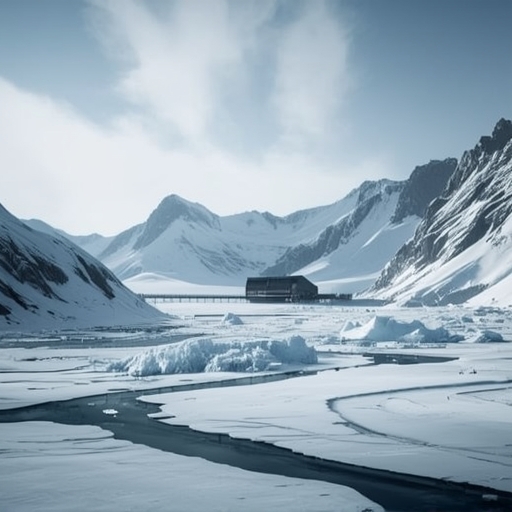
Far beneath the colossal and ancient ice sheets of Greenland lies a hidden reserve of immeasurable value — a vast repository of critical minerals essential to the technologies that define our modern world and will drive our collective future. These resources include rare earth elements and other vital materials required for renewable energy systems, electric vehicles, and countless digital innovations. Yet, while Mother Nature has endowed this Arctic island with extraordinary geological riches, the path toward unlocking that potential is anything but straightforward.
Transforming Greenland’s geological promise into real-world production presents a formidable challenge shaped by a combination of environmental, logistical, and socio‑economic constraints. Extreme cold, unpredictable weather patterns, and months of darkness impose severe limitations on both exploration and extraction. The island’s remote geography, combined with a lack of basic infrastructure such as roads, ports, and power grids, multiplies both cost and complexity. Even transporting heavy equipment to potential mining sites often requires heroic levels of coordination and investment.
Moreover, Greenland’s pristine natural environment adds additional layers of responsibility and ethical concern. Any mining initiative must balance economic opportunity with ecological preservation. The icy landscape is fragile and extraordinarily sensitive to human intervention — one misstep could cause irreversible environmental harm. As global attention turns toward sustainable development and the ethics of resource extraction, Greenland finds itself at a crossroads: should it pursue prosperity through mining, or protect its untouched wilderness?
Currently, despite its enormous potential, only a single mine operates fully within Greenland’s borders. This fact alone underscores the immense pressures associated with scaling up production in such a daunting environment. Success will depend not only on technological innovation but also on careful policy-making, community engagement, and international cooperation. It is not simply a question of what Greenland possesses beneath its ice, but rather how — and at what environmental, cultural, and moral cost — those resources can be responsibly and sustainably developed.
Greenland’s mineral wealth represents both a tantalizing opportunity and a sobering reminder of the limits of human ambition in the face of nature’s extremes. As the world’s appetite for clean energy grows, the island stands as a symbol of the delicate balance between progress and preservation, between technological advancement and environmental stewardship. The challenge of mining in Greenland, therefore, is not just geological — it is philosophical, economic, and profoundly human in scope.
Sourse: https://www.businessinsider.com/greenland-mining-rare-earths-minerals-china-supply-chains-trump-costs-2026-1