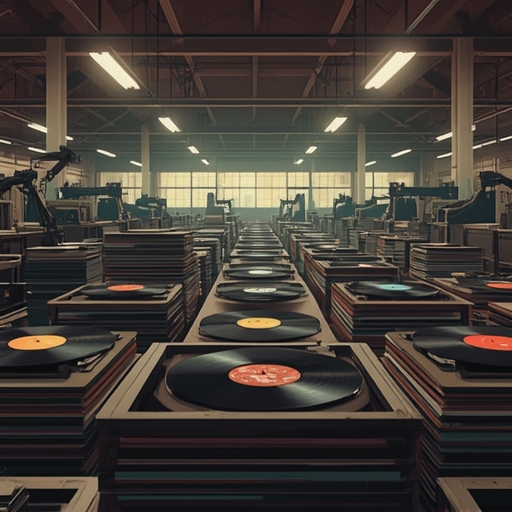
Vinyl records, once deemed relics of a bygone era, have experienced one of the most unexpected and inspiring revivals in modern music history. In an age dominated by digital streaming and intangible sound files, these tangible discs of analog artistry have reclaimed a powerful place in global culture. At the epicenter of this sonic renaissance lies a factory in the Czech Republic, a facility that quietly evolved into the beating heart of the vinyl revival, ensuring that the warmth, depth, and tactile beauty of analog sound would not merely survive but flourish once again.
To understand the magnitude of this resurgence, one must recall vinyl’s past. During the late twentieth century, American vinyl manufacturing—once a cornerstone of the nation’s music industry—faltered under the relentless rise of new technologies. Cassette tapes offered portability, compact discs promised clarity without scratches, and digital downloads soon eliminated the need for physical products altogether. Vast pressing plants, which had once produced millions of albums yearly, were shuttered and abandoned, leaving behind a once-thriving craft reduced to a niche curiosity. Yet, while much of the Western world transitioned to ephemeral digital formats, in a small Czech town, a different story was taking shape.
There, engineers and craftspeople preserved century-old techniques even as the world shifted toward the virtual. Their factory, originally built to serve a regional market, became a guardian of analog heritage—maintaining and improving machines that other companies had long scrapped. Over time, it transformed from a modest local enterprise into the largest vinyl-producing plant on the planet, supplying records to major labels, independent artists, and collectors alike. Its presses churned not just products but cultural continuity, bridging the meticulous artistry of the past with the demands of contemporary sound culture.
As demand for vinyl surged anew around the early 2010s, sparked by audiophiles, DJs, and nostalgic newcomers alike, global production strained to keep pace. The Czech factory rose to meet the challenge. Through a fusion of traditional techniques and modern engineering precision, it mastered large-scale production while protecting what makes vinyl special: warmth, texture, and authenticity. Every groove carved into a disc carried both technical innovation and the soul of craftsmanship, a reminder that music can still be something you see, touch, and feel vibrating beneath your fingertips.
This revival is far more than a commercial success story—it represents a cultural reawakening. Vinyl reintroduced listeners to a slower, more intentional way of experiencing music. In an era of playlists and algorithms, the ritual of lowering a needle onto a record became an act of pause and presence. The Czech plant, by becoming the nucleus of this movement, proved that enduring artistry and precision engineering could thrive together, harmonizing past and future rather than allowing one to replace the other.
Today, as millions rediscover the joy of analog sound, the story of American decline and Czech renewal offers a profound lesson in resilience. What began as the near-extinction of a craft has evolved into a global renaissance—one pressed, polished, and perfected in the heart of Europe. Through its vision, dedication, and respect for the tactile beauty of music, this factory did more than rescue vinyl; it redefined how the world listens, reminding us that true sound—like true art—never truly disappears, it only waits to be rediscovered.
Sourse: https://www.businessinsider.com/the-rise-and-fall-of-american-vinyl-manufacturers-2026-1