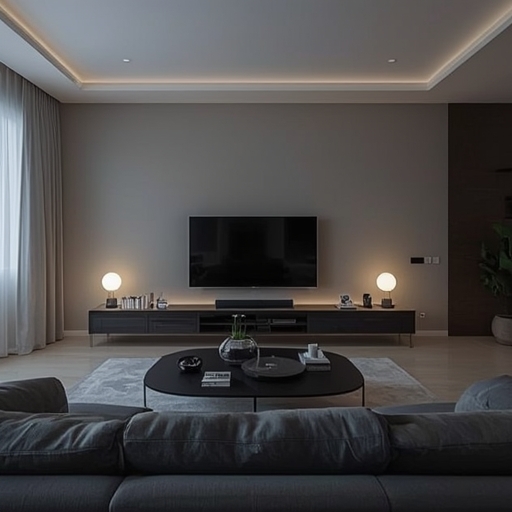
Ikea has once again sought to redefine the boundaries between accessibility, design, and technology with the launch of its new smart home range — a collection of remarkably low-cost devices that embrace the Matter-over-Thread standard. On paper, this initiative promises a harmonious ecosystem where different brands and platforms can coexist without the usual compatibility headaches. The Swedish retailer is introducing an assortment of programmable buttons, smart plugs, intelligent lightbulbs, and motion sensors, each priced from an impressively modest six dollars. This affordability aligns perfectly with Ikea’s long-standing vision of democratizing innovation by making cutting-edge technology attainable for the average household.
Yet, while the premise appears groundbreaking, early adopters and product reviewers have encountered a set of technical stumbling blocks that somewhat undermine the polished ideal of effortless integration. Reports describe intermittent connectivity dropouts, devices struggling to maintain stable links with Thread networks, and inconsistent recognition by controlling apps across different ecosystems. These hurdles reveal an emerging truth of the smart home industry’s ongoing evolution: seamless interoperability remains more aspiration than reality.
Matter-over-Thread was designed precisely to overcome the fragmentation that has long plagued connected home technologies. In theory, it should serve as a universal language capable of linking previously isolated ecosystems such as Apple HomeKit, Google Home, Amazon Alexa, and Samsung SmartThings. Ikea’s decision to embrace this protocol thus embodies the next logical step in expanding the brand’s reputation for practicality and user-centered design. However, the execution still appears to be catching up to the promise, illustrating how even global leaders in functional design face challenges when translating theory into reliable performance.
The brand’s effort to balance affordability with technical sophistication inevitably presents a tension between cost efficiency and long-term reliability. A device that is inexpensive but fails to stay consistently connected might save money initially but risk frustrating consumers seeking convenience and dependability above all. In this light, Ikea’s early Matter-enabled lineup is perhaps better understood as a work in progress — an encouraging, if imperfect, milestone on the road toward genuine smart home universality.
Consumers now find themselves in the familiar position of technological pioneers: caught between the allure of new possibilities and the patience required for refinement. The central question persists — should buyers embrace the thrill of early adoption, accepting the occasional hiccup as part of the journey, or wait until subsequent firmware updates and product revisions smooth out the remaining irregularities? Regardless of the stance one takes, Ikea’s latest venture undeniably highlights both the potential and the pitfalls of our increasingly connected domestic future.
As the brand continues iterating on its hardware and software foundation, the smart home community will watch closely. Should these devices evolve to deliver the stable, reliable interactions that Matter-over-Thread promises, Ikea may yet solidify its place not only as a furniture giant but as a genuine force within the rapidly expanding Internet of Things landscape. For now, the ambition is clear, the foundation is promising, and the execution — while imperfect — marks a bold step toward bringing smart living out of niche luxury and into everyday life.
Sourse: https://www.theverge.com/tech/873973/ikea-matter-thread-smart-home-connectivity-issues