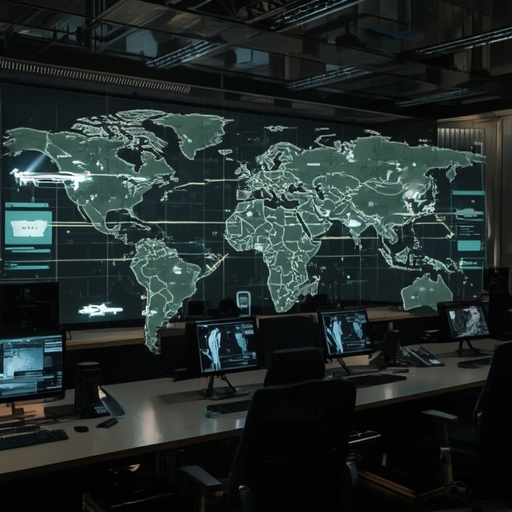
The United States Army has embarked on a transformative journey in the realm of defense logistics through the deployment of its groundbreaking NGC2 software—a system that seamlessly merges artificial intelligence, predictive analytics, and battlefield simulation. At its core, NGC2 represents more than just a technological upgrade; it signals a fundamental shift in how modern militaries anticipate, plan, and execute logistical strategies. Rather than responding reactively to battlefield demands, the platform empowers decision‑makers to forecast the needs of ammunition, fuel, and other critical supplies with remarkable precision, long before shortages could ever impede operations.
Drawing upon advanced computational models, NGC2 evaluates patterns of enemy engagement, hostile maneuvering, and resource depletion rates in real time. This allows it to generate dynamic projections of future consumption across multiple combat scenarios—transforming the art of supply chain management from a static, administrative process into a living, adaptive system that evolves alongside shifting tactical landscapes. The result is a more resilient, agile, and responsive logistics architecture—one capable of sustaining soldiers in complex, rapidly developing environments.
What truly distinguishes NGC2 is its ability to integrate data from a mosaic of sources—sensor networks, intelligence reports, maintenance schedules, and mission simulations—and synthesize them into cohesive, actionable insights. This creates a powerful decision‑support environment that enables commanders to preempt crises, allocate resources more efficiently, and sustain operational tempo even under extreme pressure. For example, during a protracted engagement, the software might detect that projected ammunition expenditure will exceed resupply timelines, automatically prompting supply convoys or autonomous drones to reconfigure delivery routes and prioritize crucial materials.
Beyond these tactical advantages, the implementation of NGC2 also enhances strategic readiness. Predictive maintenance modules monitor the health of vehicles and weapons systems, mitigating breakdown risks before they occur. Its artificial intelligence engine refines itself continuously by learning from historical outcomes—each mission analyzed, each logistic decision assessed—culminating in a system that becomes more accurate and intuitive with every operation. In essence, the Army is cultivating an intelligent ecosystem of self‑optimizing logistics that mirrors the sophistication of twenty‑first‑century warfare.
In the broader context of defense innovation, NGC2 demonstrates how data‑driven foresight and AI‑assisted operations can redefine the very foundation of military preparedness. It empowers soldiers not merely to react faster, but to anticipate the future with analytical confidence. As geopolitical landscapes grow more unpredictable and combat scenarios increasingly multidimensional, such technology ensures that America’s armed forces remain equipped, supplied, and strategically positioned at every critical moment. NGC2 thus embodies a vision of warfare where intelligence and logistics converge, forming the connective tissue that sustains victory in both the digital and physical theaters of modern conflict.
Sourse: https://www.businessinsider.com/new-us-army-software-predicts-ammo-supply-needs-enemy-actions-2026-2