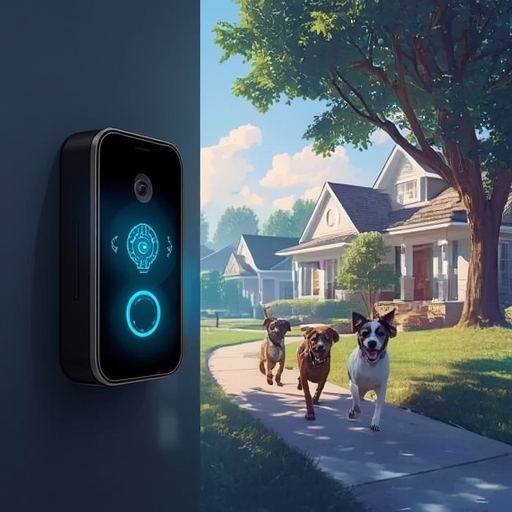
In an era where artificial intelligence is reshaping everything from business operations to personal convenience, Amazon’s Ring Doorbell has emerged as an unlikely but powerful force in reuniting lost pets with their families. Through its innovative AI-driven feature called Ring’s Search Party, the company managed to help 99 missing dogs find their way home in a remarkably short window of just 90 days. This achievement illustrates not only the tangible potential of AI to solve real human problems but also highlights how machine learning can intersect with compassion and community engagement.
Amazon’s CEO, Andy Jassy, described this initiative as a ‘compelling’ application of artificial intelligence—a term that resonates beyond technology circles and into public imagination. The capability relies on the Ring network and advanced image-recognition algorithms that can identify and match pets captured on users’ doorbell cameras to those reported missing. In doing so, Amazon demonstrates how everyday consumer technology can transcend its primary security function and serve a deeply emotional, human-centered purpose. It’s a striking example of innovation that directly improves lives without requiring specialized equipment or expert intervention.
Yet, even as many celebrate these heartwarming results, there are voices of skepticism and social concern. Some observers labeled the initiative’s Super Bowl advertisement as ‘dystopian,’ reflecting growing unease with surveillance technologies that turn neighborhoods into watchful digital ecosystems. The emotional response isn’t entirely misplaced; it raises valid questions about privacy, consent, and the extent to which society is comfortable with pervasive camera networks, even when deployed for benevolent causes. This tension between ethical boundaries and technological optimism defines much of today’s AI discourse.
Nevertheless, the story of Ring’s Search Party encapsulates the duality of modern innovation—a blend of promise and caution. On one hand, the speed and scale of these reunions showcase the immense social potential of artificial intelligence when applied creatively and responsibly. On the other, it challenges us to critically assess the balance between utility and oversight, particularly as AI continues to integrate into the most intimate aspects of daily life. Imagine a future where similar systems could help rescue not only pets but also locate missing persons or identify urgent emergencies before human responders arrive.
Ultimately, Amazon’s experiment with Ring AI is more than a feel-good anecdote—it’s a window into how technology can embody empathy, efficiency, and accountability all at once. Whether one views it as an optimistic triumph of innovation or a nudge toward an over-connected society, it undeniably marks a milestone in how artificial intelligence can serve the public good. The challenge that remains is ensuring that the path forward preserves privacy as diligently as it celebrates progress, allowing humanity and technology to coexist in mutual benefit rather than uneasy compromise.
Sourse: https://www.businessinsider.com/amazon-ceo-ring-search-party-ad-pet-finder-99-dogs-2026-2