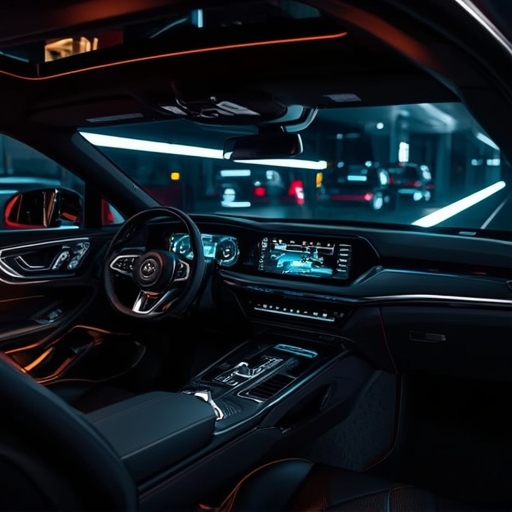
Toyota has embarked on a groundbreaking technological journey by developing its own proprietary game engine, an innovation that marks a decisive shift in how the company envisions the future of human–machine interaction within its vehicles. This advanced software platform forms the digital backbone of what Toyota calls the next-generation “digital cockpit”—an intricately designed virtual interface that offers drivers and passengers an unprecedented level of interactivity, intuitiveness, and immersion.
Rather than relying solely on pre-existing third-party engines, Toyota Connected North America chose to create an internal system meticulously tailored to the brand’s automotive ecosystem. The result is an engine capable of rendering high-fidelity, real-time 3D graphics directly within the car’s environment, enabling a dynamic and visually rich driving experience. Through this system, drivers can access lifelike tutorials that simulate the operation and maintenance of vehicle features in a fully interactive, game-like manner. For instance, instead of reading static manuals or following simple animations, users can explore a photorealistic digital model of their vehicle and practice operations virtually, observing instant visual feedback as if they were playing an educational simulation.
A central aspect of this innovation lies in real-time environment mapping—a sophisticated process in which the vehicle’s sensors collect and interpret data from the surrounding environment, continuously updating digital representations of roads, pedestrians, and obstacles. This feature provides both enhanced safety awareness and a captivating visual dimension, as drivers can now perceive complex driving data through dynamic, intelligible graphics. Much like in a game’s open-world environment, the map evolves fluidly according to changing conditions, merging practical information with aesthetic elegance.
What truly distinguishes Toyota’s approach, however, is its capacity to integrate the logic and design principles of game development into the world of mobility technology. The interface responds to touch gestures, voice commands, and contextual data flows with remarkable fluidity, evoking the responsiveness of a high-quality gaming experience. Every motion—from scrolling through panels to adjusting vehicle settings—feels deliberate, precise, and visually cohesive. This harmony between human input and software feedback transforms driving into a more engaging, natural, and even pleasurable interaction.
Beyond driver experience, the in-house engine also represents a strategic milestone for Toyota’s long-term digital evolution. By owning the entire technology stack, the company ensures full control over optimization, scalability, and integration with future innovations such as augmented reality guidance and cloud-synchronized infotainment ecosystems. Moreover, the proprietary nature of this system allows for elegant adaptation across multiple vehicle lines, ensuring design consistency and rapid updates without dependency on third-party licensors.
Ultimately, Toyota’s new game engine symbolizes far more than a technical achievement—it is a bold declaration about the convergence of entertainment software design and automotive engineering. It exemplifies how creativity and technological precision can coexist to redefine mobility, pushing the boundaries of what a vehicle interface can be. As the automotive industry moves steadily toward intelligent and connected ecosystems, Toyota stands at the forefront of that evolution, demonstrating how imagination, interactivity, and innovation can reshape not only how we drive but how we relate to the very concept of the driving experience itself.
Sourse: https://www.theverge.com/games/875995/toyota-fluorite-game-engine