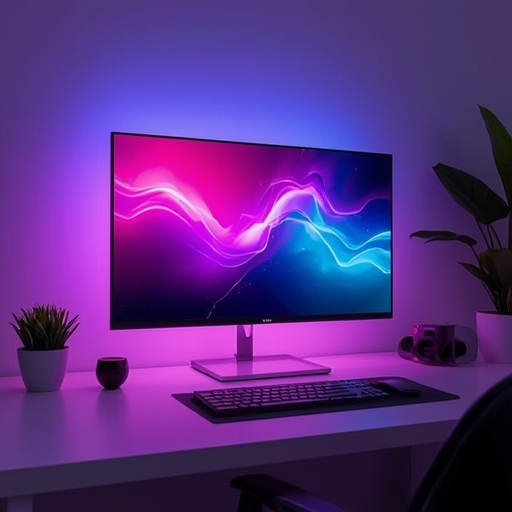
It’s understandable that many people still express concern over the issue of OLED ‘burn-in.’ After all, for years this phenomenon—where persistent images leave faint, lasting impressions on the screen—has loomed as one of the few drawbacks of otherwise extraordinary display technology. Yet, it may be time to recalibrate that anxiety. The OLED panels found in contemporary monitors, televisions, and laptops have evolved dramatically; they are now engineered with advanced materials, refined pixel structures, and improved power distribution systems that make them markedly more resistant to image retention. This doesn’t mean they are invincible—just that a little mindfulness goes a long way in preserving their brilliance.
Today’s OLED displays provide unparalleled visual fidelity: impossibly deep blacks, dazzling contrast ratios, and colors that seem to leap from the screen with almost tangible energy. These characteristics stem from their unique self-emissive pixel design—each tiny diode generates its own light, allowing for perfect control over luminance and saturation. The result is cinematic realism and a sense of dimensionality that conventional LCDs struggle to match. For professionals in design, film editing, or photography, this precision in color rendering can be transformative, making OLED not merely a preference but a performance necessity. Even casual users benefit: scrolling through vibrant imagery or watching a film gains a richness that feels immediately luxurious.
Of course, with such sophistication comes responsibility. The phrase ‘a little extra care’ might sound trivial, yet it encapsulates a pragmatic philosophy of screen stewardship. Reducing static imagery—like keeping toolbars, logos, or permanent UI elements lingering for hours—helps distribute pixel wear evenly. Engaging built-in features such as pixel refresh cycles or automatic screen dimming can further extend longevity. Even something as simple as adjusting brightness to match ambient light has measurable benefits. These small, deliberate habits create a cumulative shield against the long-term effects that earlier generations of OLED once suffered from.
The larger narrative here is not simply one of technological superiority, but of human adaptation. We once treated OLEDs as fragile marvels, to be admired cautiously; now, we’re witnessing their maturation into versatile, resilient tools designed for everyday use. This shift invites a reassessment of how we relate to our devices. Instead of anxiety, think stewardship; instead of restraint, consider mindful enjoyment. The modern OLED display is no longer the delicate experiment it once was—it’s a refined, enduring companion for work, creativity, and leisure.
So, when someone voices their lingering fear of ‘burn-in,’ perhaps the best response is reassurance backed by knowledge: yes, it’s a risk, but a highly manageable one. The beautiful irony is that the very technology once feared for its impermanence has, through years of innovation, become a symbol of stability and visual perfection. With thoughtful habits and appreciation for how far OLED engineering has come, your screen can remain as vivid and captivating as the day you first powered it on. 🌈🖥️
Sourse: https://gizmodo.com/maybe-its-time-to-calm-down-about-oled-burn-in-2000719872