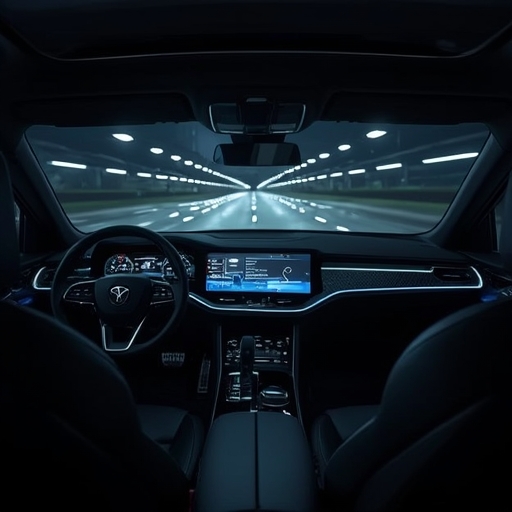
The rapid progression toward hands-free driving, once imagined as a distant technological fantasy, is now facing serious scrutiny. As recent investigations reveal, the dazzling allure of autonomous vehicle innovation is inevitably accompanied by complex safety challenges and human comprehension gaps. What was once heralded as the pinnacle of automotive advancement—vehicles capable of managing acceleration, steering, and braking without human intervention—has evolved into a subject of cautious debate, where the intersection of innovation and accountability takes center stage.
These investigations underscore an essential truth: the pace of technological development often surpasses the public’s readiness to adapt to it. Automakers, in their pursuit of cutting-edge autonomy, must now confront a pressing dilemma—how to design systems sophisticated enough to handle real-world unpredictability while remaining intuitive and transparent to everyday drivers. Although engineering teams are perfecting algorithms, sensors, and machine learning capabilities that enable vehicles to interpret complex environments, their success depends equally on how well they communicate these limitations and instructions to human operators.
A key insight emerging from these findings is that many drivers still misunderstand where the boundaries of current hands-free technology truly lie. For instance, terms like “autopilot” or “self-driving” may suggest complete independence from human vigilance, even though present systems require alertness and occasional intervention. Without clear and continuous education regarding what drivers can—and cannot—safely delegate to their cars, even the most advanced technologies risk misuse. Misplaced trust in partial autonomy has already led to preventable tragedies, reinforcing the need for explicit communication and cautious, informed adoption.
Carmakers, regulators, and researchers face a shared responsibility: to ensure that technological progress unfolds safely, ethically, and sustainably. That means emphasizing both innovation and restraint, ambition and accountability. Developing intelligent interfaces that foster driver awareness—through visual cues, auditory feedback, or adaptive alerts—can help bridge the gap between machine intelligence and human perception. Likewise, public education campaigns and transparent labeling standards can prevent the misconception that a car’s autonomy absolves its occupants from the responsibility of attention.
Ultimately, the future of hands-free driving depends not solely on innovation but also on trust—the trust of consumers who must believe that these systems will protect rather than endanger them. Building that trust requires a deliberate equilibrium between advancing groundbreaking capabilities and enforcing rigorous safety standards. Autonomous technology holds extraordinary promise for reducing accidents, minimizing human error, and redefining modern mobility. Yet genuine progress will be measured not only by what machines can do independently but by how responsibly humanity integrates them into everyday life.
Sourse: https://www.wsj.com/business/autos/hands-free-driving-ford-investigation-4fc87266?mod=pls_whats_news_us_business_f