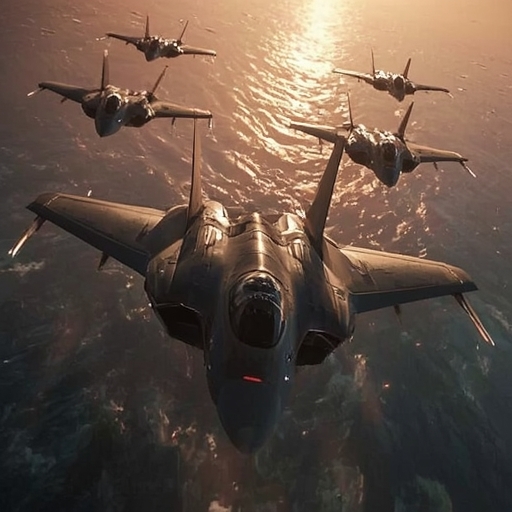
A growing chorus of airpower specialists and military strategists is cautioning that the United States Air Force must urgently accelerate the expansion of its sixth‑generation fighter and bomber programs. These experts contend that without a swift and substantial scale‑up of advanced aircraft production, the service may soon encounter severe operational limitations in the face of a potential high‑intensity conflict in the Pacific region. The geopolitical dynamics of the Indo‑Pacific, characterized by vast distances, rapidly evolving enemy capabilities, and the increasing sophistication of integrated air defense networks, demand not only superior aircraft performance but also numerical sufficiency to sustain air dominance over great ranges.
They argue that the foundation of American air superiority in the 2030s and beyond will hinge upon choices made in the present decade. The U.S. Air Force’s next‑generation platforms—engineered to combine stealth, speed, networked sensors, and long‑range strike capability—are envisioned as the decisive enablers of strategic deterrence and combat resilience. However, without adequate investment in production capacity and modernization infrastructure, the ability to field these assets in meaningful numbers could be compromised, undermining both deterrence and warfighting effectiveness.
The stakes extend far beyond the procurement of aircraft alone. Analysts highlight that scaling up sixth‑generation fighters and bombers will also demand advancements in pilot training systems, autonomous collaboration technologies, cyber defense integration, and enhanced maintenance logistics. In an era when potential adversaries are developing comparable high‑tech airframes and hypersonic threats, the failure to maintain a margin of superiority could leave the United States dangerously constrained in projecting power across the Pacific theater.
Furthermore, defense economists underscore the importance of sustained and predictable funding streams. A fragmented or inconsistent modernization plan risks disrupting the industrial base, eroding innovation momentum, and deterring private‑sector participation in critical defense initiatives. By contrast, a coherent long‑term strategy—one that aligns congressional appropriations, technological development, and production targets—would secure the Air Force’s ability to adapt to emerging challenges while preserving America’s global strategic edge.
In essence, the call to action is clear: to guarantee freedom of operation and rapid response capability in future conflicts, the United States must treat the expansion of its sixth‑generation fleet as an imperative rather than an option. Air dominance in the 2030s will not be a gift of technological destiny but the outcome of deliberate planning, consistent investment, and bold leadership today. ✈️
Sourse: https://www.businessinsider.com/air-force-needs-more-sixth-gen-fighters-bombers-china-fight-2026-2