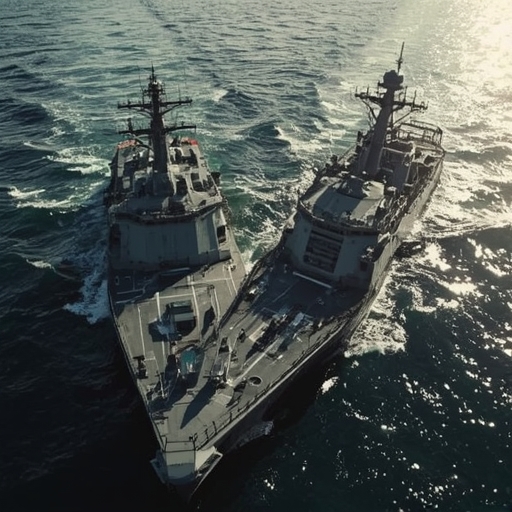
In a recent maritime operation conducted by the United States Navy, a significant incident occurred when a destroyer and its accompanying support vessel unintentionally collided in the azure waters of the Caribbean Sea. The mishap took place during a complex replenishment-at-sea maneuver, a delicate logistical task requiring exceptional coordination and precision from both vessels involved. While collisions of this nature are infrequent due to extensive safety protocols and rigorous crew training, even minor errors in timing or communication can have considerable consequences when carried out on the open ocean.
According to official reports, two service members sustained injuries during the impact. Fortunately, both individuals have been evaluated by onboard medical teams and are currently in stable condition, their injuries not considered life-threatening. Immediate emergency procedures were executed following the collision, with crew personnel securing the affected areas and ensuring the continued safety of all aboard. Damage control teams promptly assessed the extent of structural harm to both ships, mitigating risks of flooding or mechanical failure that could further endanger operations at sea.
This event underscores the inherent challenges associated with underway replenishment—an advanced process that allows naval ships to receive essential supplies such as fuel, food, and ammunition while maintaining full operational readiness without returning to port. These operations, while vital for sustaining extended naval missions, demand precise synchronization between multiple moving vessels navigating constantly changing sea conditions. Even in calm waters like those of the Caribbean, environmental factors such as wind, current shifts, or subtle steering deviations may lead to dangerous proximity or contact between ships.
The U.S. Navy has launched a comprehensive investigation to determine the root causes of the collision. Experts will analyze navigation data, communication logs, and procedural compliance to identify contributing factors and to prevent similar incidents in future operations. Such inquiries not only aim to assign accountability but also serve to enhance maritime safety protocols, refine training procedures, and reinforce risk mitigation strategies across the fleet.
Despite the temporary setback, officials expressed confidence in the resilience and discipline of the personnel involved. The ships have since been stabilized, and preliminary assessments suggest that neither vessel sustained damage severe enough to impede their eventual return to port or continued service following routine repairs. The Navy emphasized its commitment to ensuring the highest standards of operational safety and to learning from every event that tests those standards.
This occurrence serves as a vivid reminder of the complexity of modern naval logistics and the professionalism demanded of sailors who execute high-risk maneuvers at sea. It highlights both the technical sophistication of the U.S. Navy’s worldwide operations and the ever-present need for vigilance, adaptability, and precision in the face of maritime uncertainty. #USNavy #MaritimeSafety #Caribbean #NavalOperations #SafetyAtSea
Sourse: https://www.businessinsider.com/us-navy-destroyer-supply-ship-collided-in-caribbean-sea-2026-2