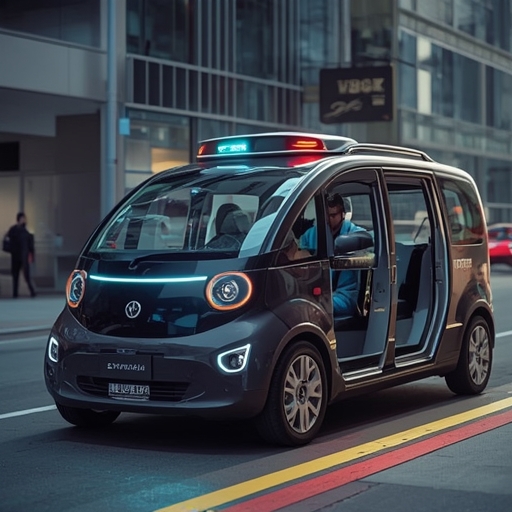
In an era increasingly defined by automation, artificial intelligence, and the rapid advancement of autonomous technologies, the unexpected can still happen — such as humans being paid to assist the very machines that were built to operate without them. Waymo, the self-driving unit of Alphabet Inc., has introduced a strikingly curious initiative that intertwines the digital economy with good old-fashioned human labor: DoorDash drivers are being compensated $11.25 simply to close the doors of Waymo’s autonomous robotaxis. What might sound at first like a trivial side task is, in truth, an illuminating reflection of both the promise and the imperfection of modern automation.
This unconventional collaboration underscores an important reality often overlooked in discussions about self-driving technology — even the most advanced systems still depend on subtle, tactile human intervention to function seamlessly. The process of shutting a car door, an act that seems almost laughably basic, can become surprisingly complex when handled by robots or AI-powered vehicles. Mechanical sensors, door hinges, and passenger behavior produce unpredictable variables that sophisticated code cannot always anticipate. In response, Waymo turned to DoorDash’s flexible gig workforce, effectively bridging the gap between human dexterity and machine precision.
Beyond the novelty of the program lies a deeper insight into the coexistence of humans and intelligent systems. By paying DoorDash drivers a modest but tangible fee per task, Waymo acknowledges that automation does not eliminate human work — it transforms it. Rather than replacing all forms of labor, emerging technologies are instead redefining what labor means. Gig workers who once delivered meals now find themselves closing the doors of cars that drive themselves, embodying a new frontier where automation and employment intermingle unpredictably.
This story is also a revealing commentary on the paradox of progress. We imagine fleets of cars navigating cities autonomously, yet at the same time rely on humans to manually complete their journeys. It reminds us that the road to full autonomy remains complex and incomplete. The partnership highlights both innovation and irony — a moment when human beings, for all their adaptability, remain indispensable contributors to systems supposedly built to remove them from the equation.
Ultimately, Waymo’s decision to collaborate with DoorDash illustrates how the future of automation is not strictly about machines replacing people, but about finding equilibrium between automation’s efficiency and humanity’s intuition. DoorDash drivers closing robotaxi doors may seem like an insignificant gesture, but it captures a profound truth: technology, no matter how intelligent, continues to depend on the simplest form of intelligence — the human touch.
Sourse: https://www.businessinsider.com/waymo-doordash-pay-drivers-shut-robotaxi-doors-2026-2